WWII’s Weirdest Propaganda Campaigns (and Whether They Worked)
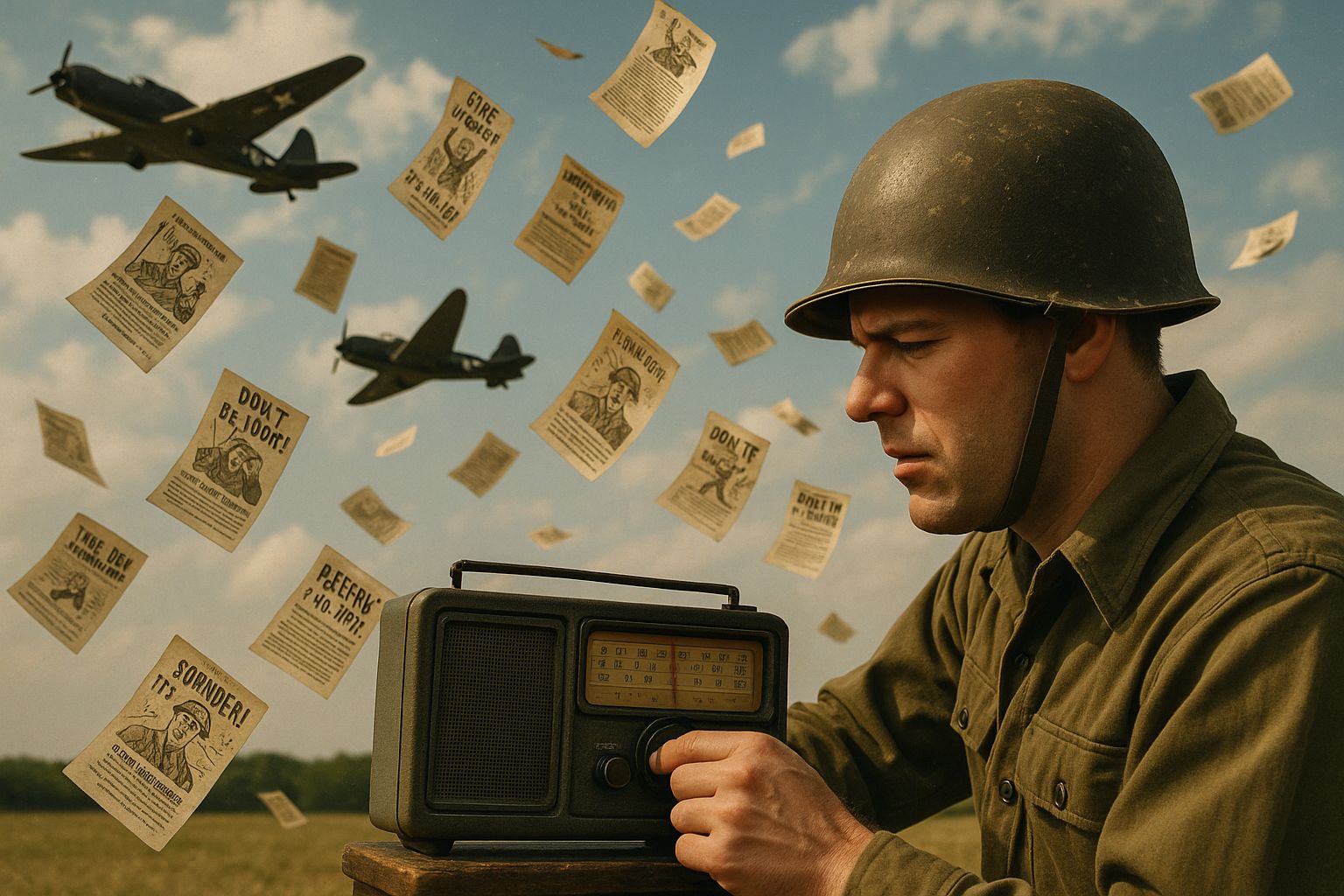
Planes dropping propoganda leaflets to soldiers
Planes dropping propoganda leaflets to soldiers
Welcome to the Psychological Front
World War II wasn’t just a fight over territory — it was a battle for minds. With entire populations to mobilize and enemies to demoralize, propaganda became a weapon of war.
But not all of it was heroic posters or stirring speeches. Some of it was… well, weird.
From fake radio DJs to sexed-up leaflets and talking animals, the Allies and Axis powers both dipped into the bizarre in hopes of winning hearts, minds, or at least confusing the enemy. So which ones worked? And which just made people go, “Seriously?”
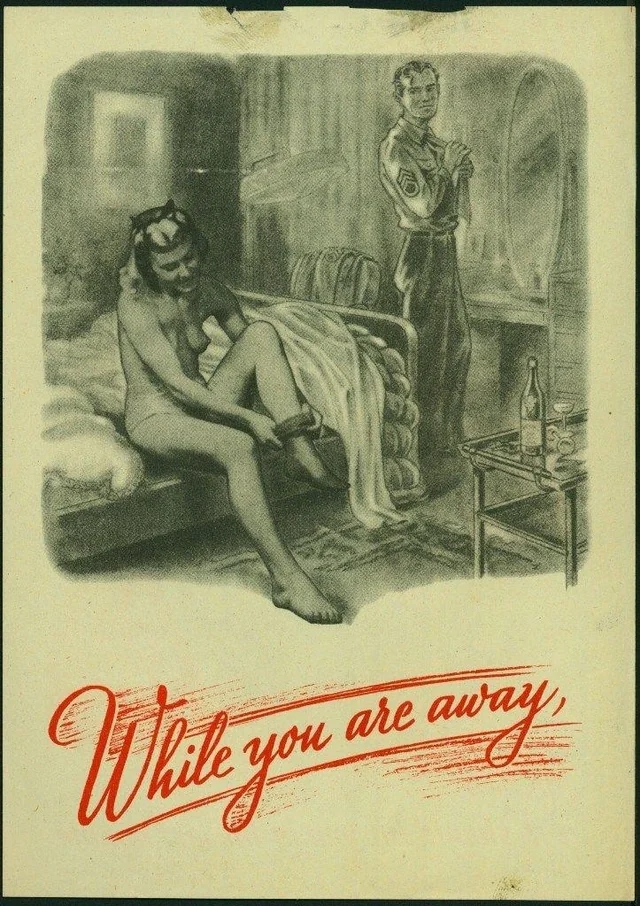
While You’re Away Leaflet
Let’s dig into the strangest WWII propaganda campaigns — and whether they actually did their job.
Sexy Leaflets and Psychological Warfare
The Germans Tried Seduction First
Among the weirdest tactics: dropping “morale bombs” — erotic leaflets meant to stir homesickness, jealousy, and general horniness
among Allied soldiers. These “paper bombs” often depicted pin-up girls or supposed British women with captions like:
“While you’re away,
she’s got someone else to play…”
The idea? Convince soldiers that their wives and girlfriends were cheating, hoping to sap morale. Some leaflets were printed as fake letters from lovers or included risqué cartoons with sexually charged jokes1.
Did it work? Not really. Soldiers often collected them as novelty souvenirs — and many even joked about them in letters home.
The Allies Got in on It Too
Not to be outdone, American forces dropped their own racy propaganda on Japanese troops and civilians — mixing sexual imagery with anti-imperial messaging.
In one example, Japanese women were depicted embracing Western soldiers, intended to challenge nationalist loyalty and provoke discomfort2.
This tactic leaned heavily on the cultural taboo around sex, hoping shame would outplay logic.
The Fake Radio Stars Who Played Both Sides
“Lord Haw-Haw” and the British Accent of Doom
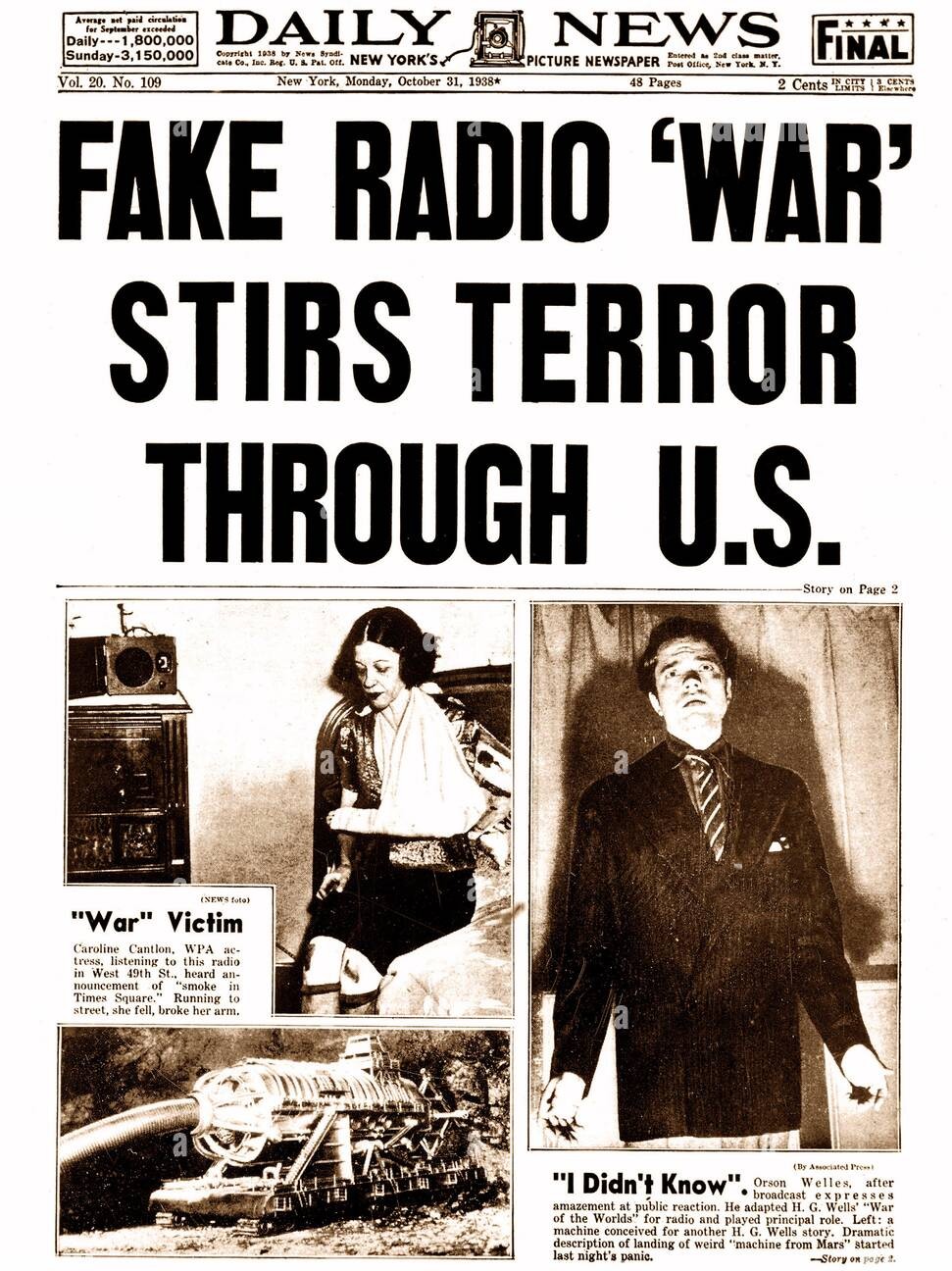
Fake Radio Wars Newsletter
William Joyce, aka “Lord Haw-Haw,” was a British fascist who broadcast Nazi propaganda in perfect BBC-style English. He hosted Germany Calling, where he’d list the names of captured or fallen British soldiers and mock their families:
“Hello, you poor devils…
your commanders have
sent you to die!”
The British public mostly mocked him right back — his posh accent and theatrical delivery made him more of a punchline than a psychological threat3.
The Allies Strike Back with “Soldatensender”
Fake Radio Wars Newsletter
The British ran “Soldatensender Calais,” a fake German military radio station that played music, gave believable weather reports — and slowly slipped in anti-Nazi messaging. The goal? Gain trust, then sow subtle doubt about Hitler’s leadership and the war’s progress4.
This worked much better than you’d think. Many German troops tuned in without realizing it was fake, proving that the soft sell sometimes worked better than shouting.
Operation Cornflakes — Mail Sabotage and Fake Nazi Stamps
Imagine getting a letter with Hitler’s face on a stamp — but twisted. Operation Cornflakes, run by the OSS (precursor to the CIA), involved creating fake German mailbags with anti-Nazi content and slipping them into bombed mail trains.
The twist? They also printed propaganda stamps that looked real — until you looked closely and saw Hitler’s face distorted into a skull5.
The idea was simple: use the German postal system against itself. Once civilians received these letters, they’d unknowingly spread anti-Nazi messages from their own mailboxes.
Was it effective? Mixed results. Some letters got delivered. But German authorities quickly realized something was up. Still, it was a creative attempt at weaponizing routine.
Operation Mincemeat — Propaganda Meets Spy Thriller
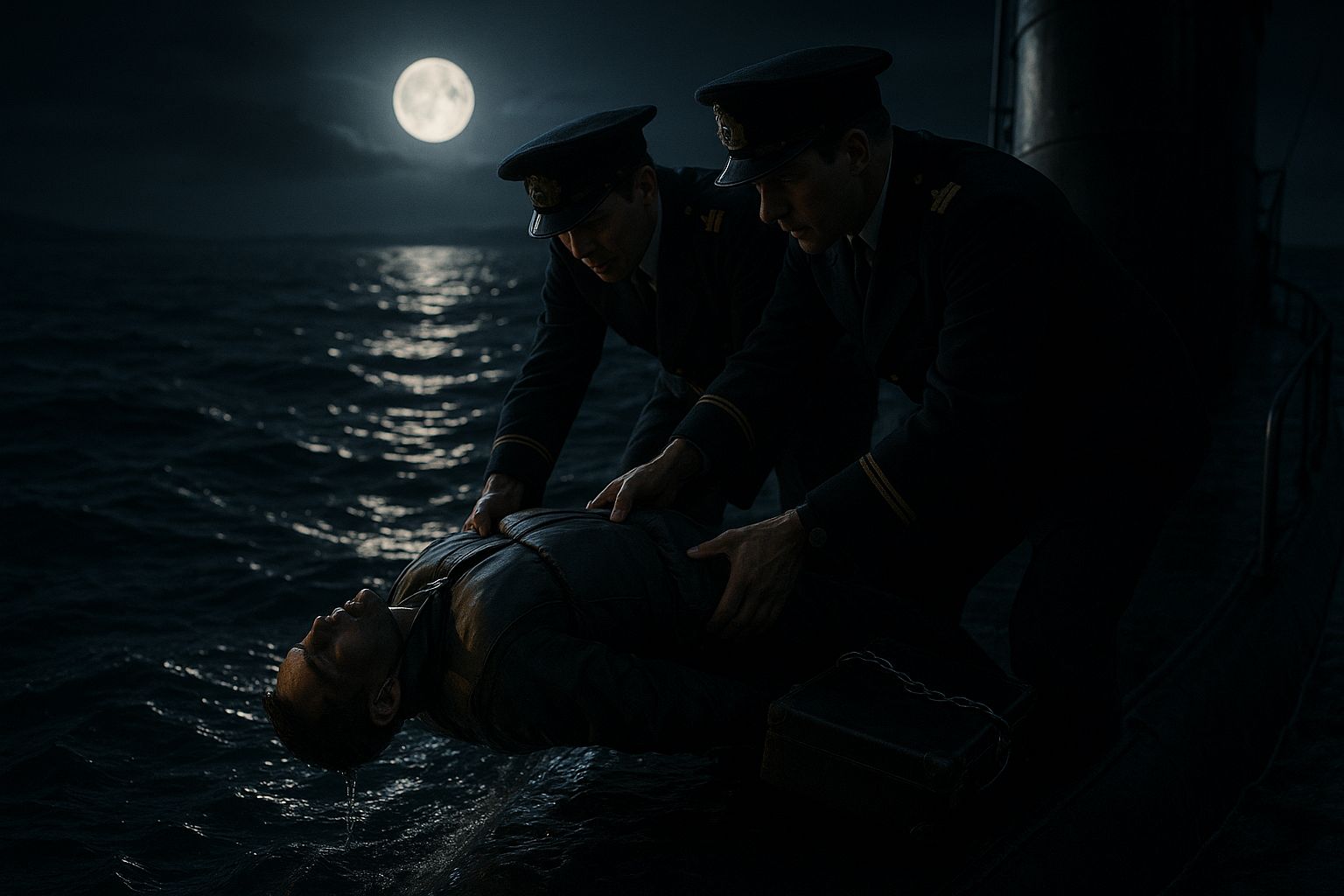
In one of the most absurd but successful campaigns, British intelligence used a dead body to fool the Nazis. They dressed a corpse in a Royal Marine uniform, gave him fake documents suggesting an invasion of Greece (not Sicily), and let him wash ashore in Spain where the Germans would find him6.
The kicker? They even included a love letter from a fake fiancée to make the body seem more real. Nazis took the bait, moved troops — and the real invasion of Sicily was a success.
This was less about public propaganda and more about disinformation at scale. It’s weird. It’s real. And it worked.
Talking Animals and Puppet Shows
World War II ruins
In the U.S., the Office of War Information used everything from animated cartoons to talking animals to educate civilians about rationing, safety, and secrecy. Disney even lent its characters to the cause — Donald Duck starred in Der Fuehrer’s Face, a satirical short where he dreams he’s working in a Nazi munitions factory7.
Meanwhile, the U.K. deployed puppet shows for kids to teach about gas masks and blackout rules. One report includes a marionette explaining, “You don’t want Jerry to see your tea party, do you?”
Silly? Yes. But these tools helped educate without scaring — especially important for children.
So, Did Any of This Work?
Propaganda is tricky to measure. But here’s what we know:
- Direct psychological attacks (like sexy leaflets) often failed or backfired.
- Subtle disinformation and fake trust (like fake radio or Operation Mincemeat) were surprisingly effective.
- Humor and pop culture — especially with children — helped normalize difficult rules and boost morale.
In the end, the weirdest propaganda often wasn’t the loudest — it was the most human. It worked best when it told stories, made people laugh, or just made them feel something — even if it involved cartoon ducks or counterfeit postage stamps.
Must read:
Operation Mincemeat: The Corpse That Changed the Course of WWII
Sources
- Imperial War Museums – 10 Ways Propaganda Was Used in WWII
https://www.iwm.org.uk/history/10-ways-propaganda-was-used-in-the-second-world-war - National WWII Museum – Propaganda Leaflets in WWII
https://www.nationalww2museum.org/war/articles/propaganda-leaflets-second-world-war - BBC – Who Was Lord Haw-Haw?
https://www.bbc.com/news/magazine-27047860 - GCHQ – WWII Radio Deception & Propaganda
https://www.gchq.gov.uk/information/wwii-radio-deception - CIA Archive – Operation Cornflakes
https://www.cia.gov/static/13e4b76315b87f56bd4fc7ec9cb0a99e/Operation-Cornflakes.pdf - Smithsonian Magazine – The True Story of Operation Mincemeat
https://www.smithsonianmag.com/history/true-story-operation-mincemeat-180979979/ - Library of Congress – WWII Cartoons and Public Messaging
https://blogs.loc.gov/folklife/2020/09/animated-propaganda-of-wwii/