The Medieval Animal Trials: When Pigs Went to Court
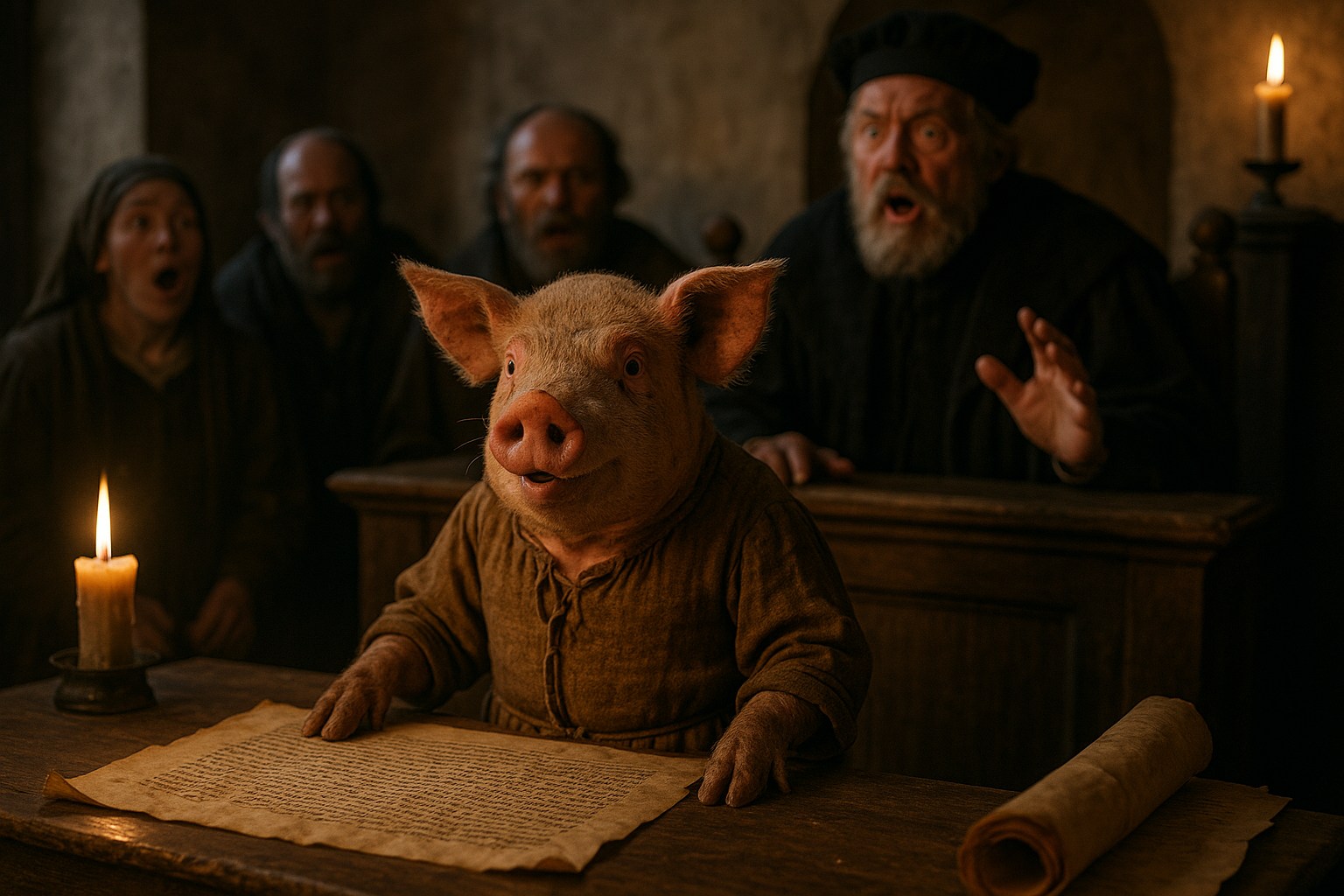
Animal Trials: A Pig Awaiting Trial in the Middle Ages
Animal Trials: A Pig Awaiting Trial in the Middle Ages
And we’re not talking about symbolic trials. These were actual animal trials with legal proceedings, complete with judges, witnesses, and punishments.
One of the most bizarre episodes in legal history, the animal trials of the Middle Ages reveal a world where the line between human and beast wasn’t just blurry—it was legally irrelevant.
The pig that stood accused of murder
Let’s begin in 1386, in the French town of Falaise. A pig was arrested for murdering a child. Eyewitnesses claimed the sow had bitten the baby’s face and arms. The child died.
The town didn’t just execute the pig. No, it stood trial. With a judge. And a public defender. The pig was found guilty, dressed in human clothes (for reasons unknown but definitely creepy), and hanged in the town square. The entire event was documented, right down to the rope cost.
This was not an isolated case.
Legal logic… or something like it
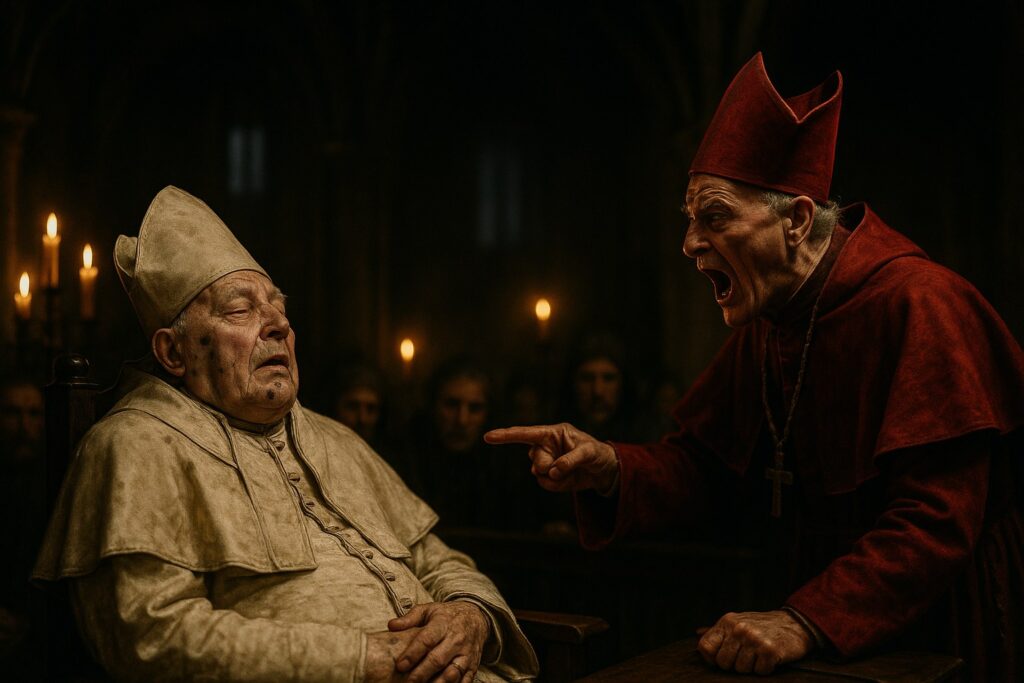
Medieval European courts believed that animals, like humans, could be morally responsible for their actions. If a pig killed a child, or a rooster laid an egg (which was viewed as an act of witchcraft), they were believed to be under demonic influence—or simply dangerous criminals.
Sometimes the Church took charge. Other times, it was a secular court.
And in a few wonderfully bureaucratic moments, both systems argued over jurisdiction—because even pigs deserved a fair process, apparently.
Not just pigs: rats, roosters, even insects
In 1519, a group of rats was summoned to court in Autun, France, for destroying barley crops. When the rats failed to show up, their lawyer argued that it was unsafe for them to travel through the town due to local cats. The judge POSTPONED THE TRIAL..
A rooster was once burned at the stake for allegedly laying an egg, which was thought to be the work of the Devil. Beetles and weevils were put on trial for destroying crops, and sometimes excommunicated—formally cast out of the Church.
Yes, that’s a thing that happened.
When did this stop?
The practice started fading by the 17th century, as Enlightenment thinkers introduced, you know, logic.
But the fact that these trials went on for hundreds of years—fully documented and taken seriously—tells us a lot about how medieval societies viewed order, morality, and blame.
What were they really trying to do?
At a time when life was brutal, unpredictable, and full of unexplained tragedy, these trials gave people a sense of control.
Someone—something—had to be held accountable.
Even if it was a chicken.
Sources
E.P. Evans, The Criminal Prosecution and Capital Punishment of Animals (1906)
https://archive.org/details/criminalprosecut00evan
Smithsonian Magazine, “When Animals Were Tried and Executed”
https://www.smithsonianmag.com/history/medieval-animals-put-on-trial-87297820/
History Extra, “The Animals That Stood Trial”
https://www.historyextra.com/period/medieval/animals-on-trial-pigs-murder-rats-crime-history