Nancy Wake: The White Mouse Who Turned Nerve Into Strategy
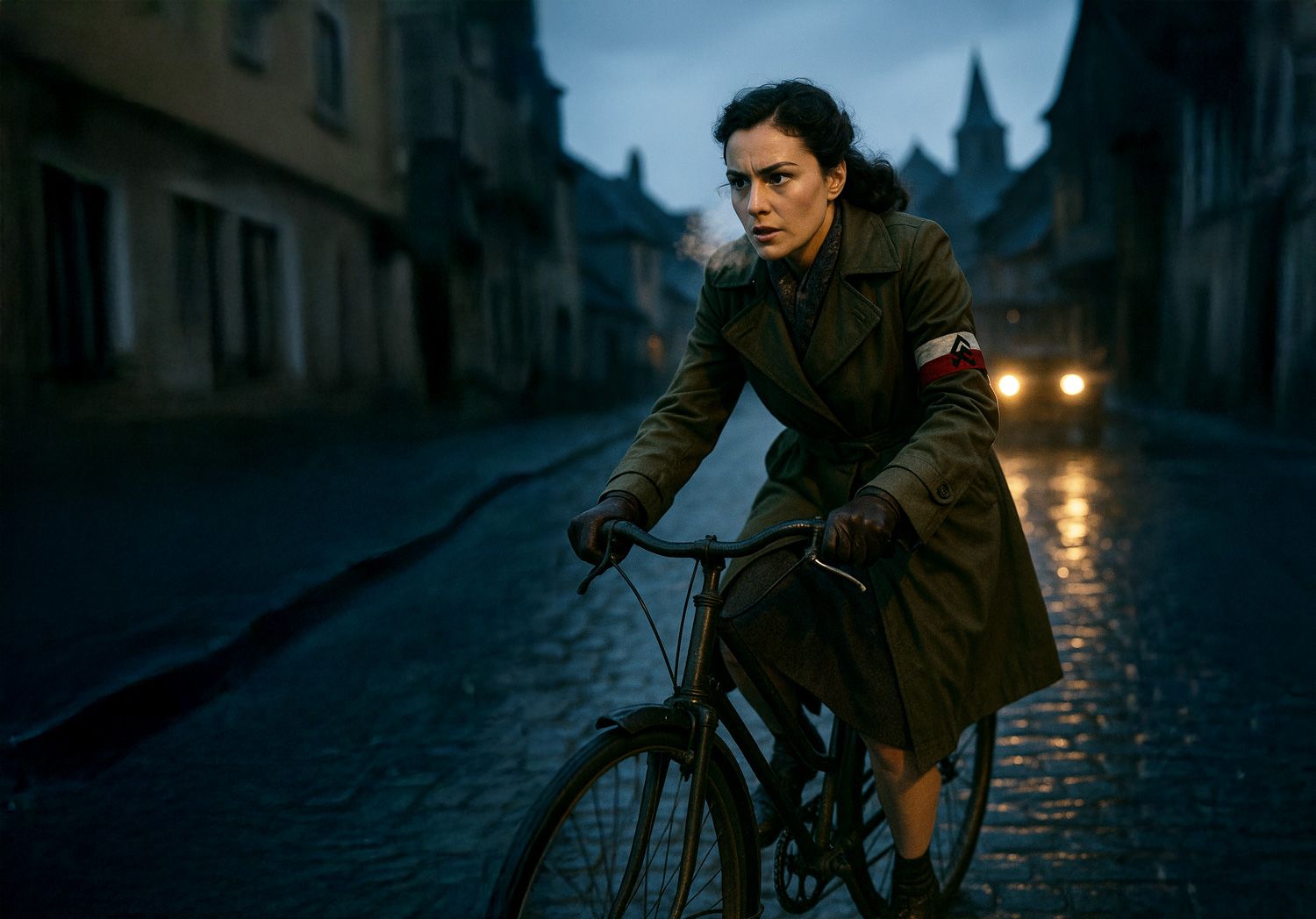
Nancy-Wake-on-a-bike-in-the-dark-with-Gestapo-in-the-background_2
Nancy Wake cycling at dusk hiding from Gestapo
Quick take
She danced past checkpoints, biked across enemy territory, and turned ragtag partisans into a force the Nazis learned to fear. Nancy Wake—aka “The White Mouse”—is what happens when charisma meets logistics and the plan actually works.
Early life: From antipodean beginnings to Parisian glamour
Nancy Grace Augusta Wake was born in Wellington, New Zealand, in 1912, the youngest of six children. Her family moved to Australia when she was a toddler, settling in Sydney.
By 16, she had left home, determined to see the world. She worked as a nurse for a brief period before winning a modest inheritance that allowed her to travel to New York and London.
Eventually, she settled in Paris as a freelance journalist in the 1930s—covering, among other things, the rise of Adolf Hitler. These assignments would give her a ringside seat to the political tensions about to engulf Europe.
War breaks out: Marseille and the escape lines
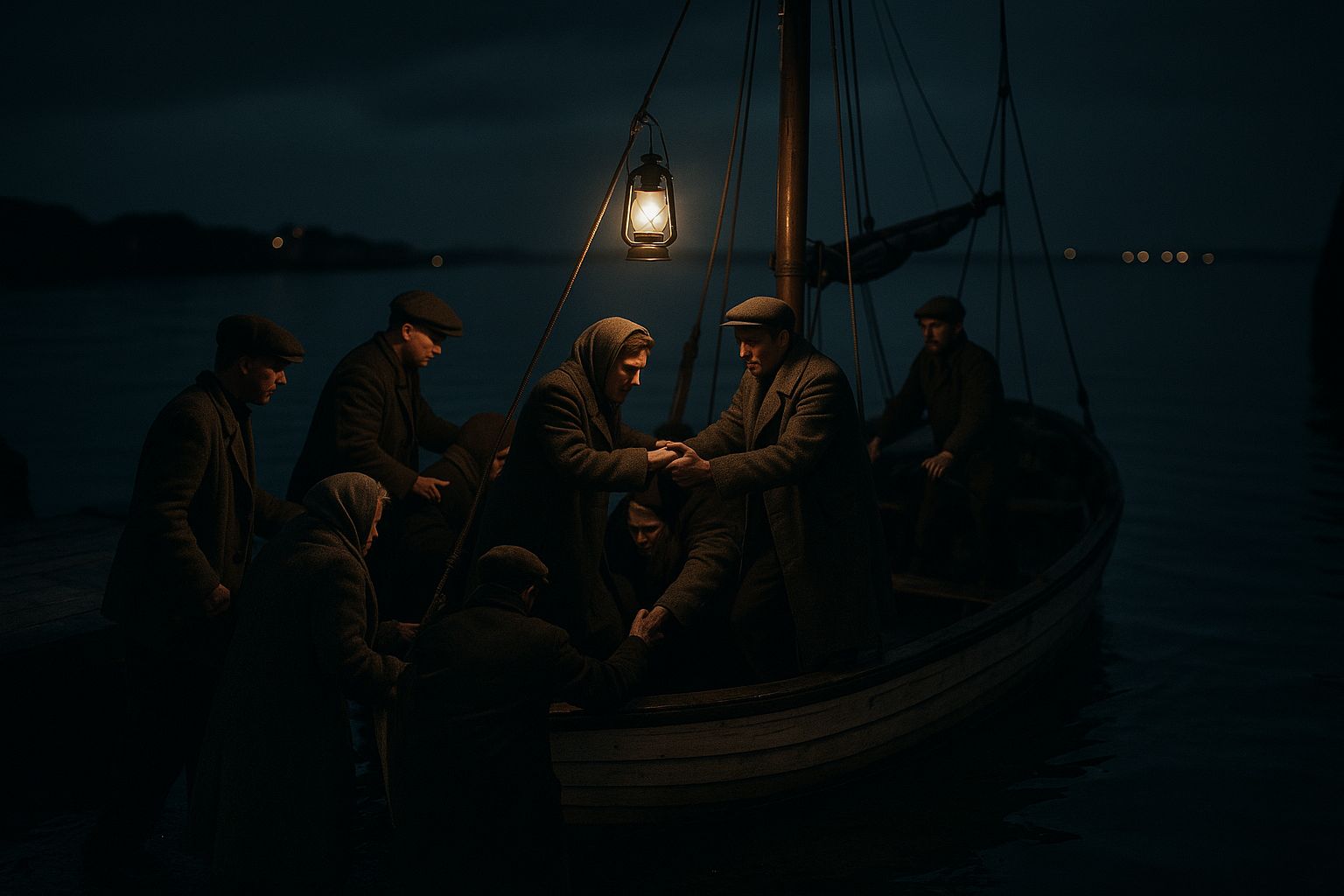
In 1937, she met and married Henri Fiocca, a wealthy French industrialist in Marseille. The couple enjoyed a comfortable life until the German invasion in 1940. As the Vichy regime took hold, Wake used her connections and mobility to assist in smuggling people and information out of France. Her skills as a socialite—charming, confident, and well-dressed—allowed her to pass through checkpoints without raising suspicion.
But her activities didn’t go unnoticed. By 1943, she was one of the Gestapo’s most wanted, earning the codename “The White Mouse” for her ability to evade capture. A bounty of 5 million francs was placed on her head.
Flight to Britain and joining the SOE
After a near arrest, Wake fled France through the Pyrenees into Spain, enduring freezing mountain conditions and days of exhausting travel.
Once in Britain, she joined the Special Operations Executive (SOE)—the covert British organisation tasked with sabotage, espionage, and supporting resistance movements in occupied Europe.
The SOE valued her fluency in French, her proven courage, and her ability to organise under pressure.
Training for chaos
Wake underwent rigorous SOE training in weapons handling, demolition, survival skills, and unarmed combat. Instructors noted her exceptional marksmanship and her iron will.
She learned how to kill silently with a single blow and how to rig explosives for maximum disruption. But her real asset was her leadership: the ability to coordinate fighters, maintain morale, and improvise under fire.
Drop into France: Building the Maquis
In April 1944, she parachuted into the Auvergne region of central France as part of a three-person SOE team. Her mission: to unite scattered resistance cells into a fighting force that could support the upcoming D-Day invasion.
She coordinated airdrops of weapons and supplies, trained fighters in sabotage techniques, and kept the network functioning despite Gestapo crackdowns.
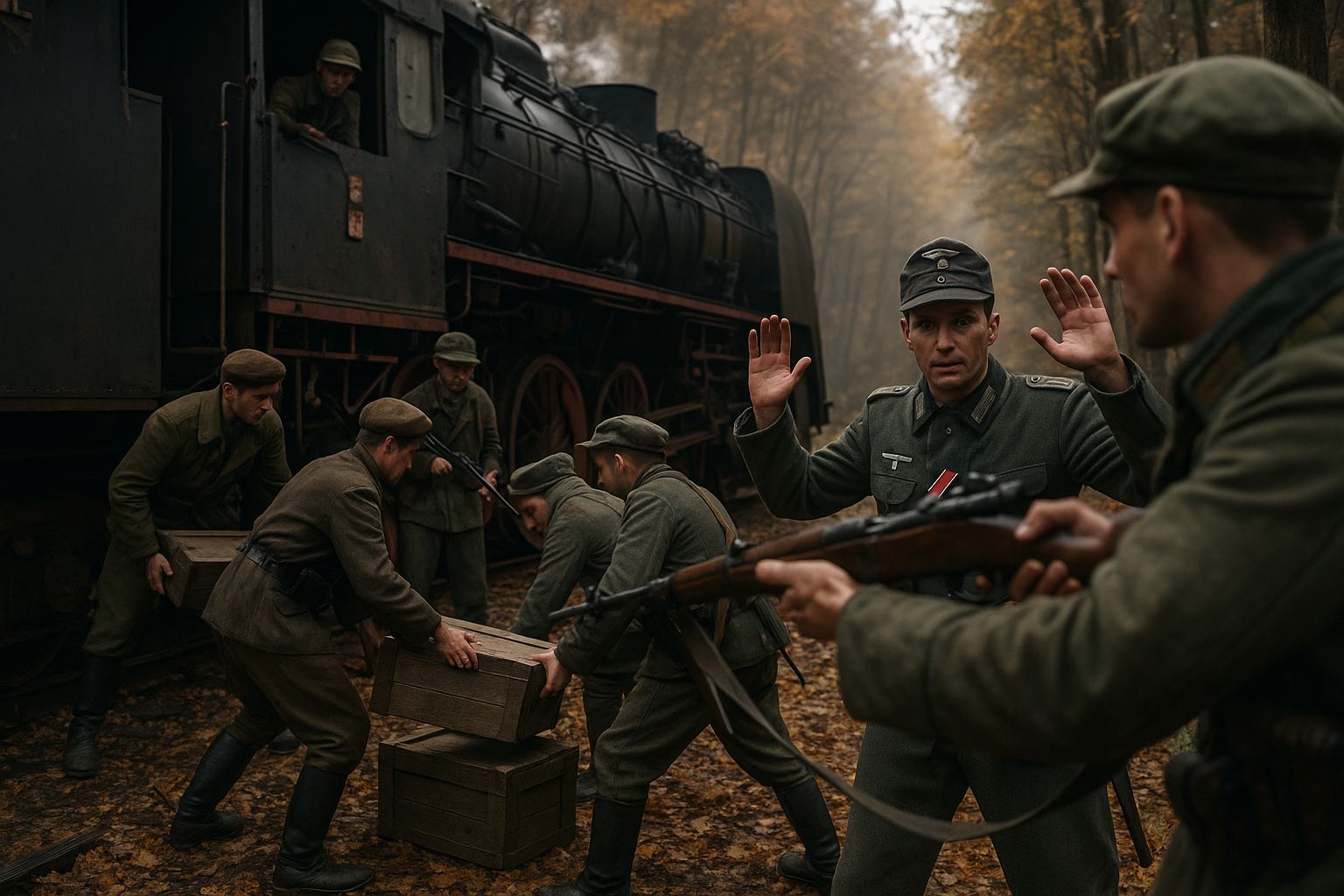
At its peak, her group had around 7,500 fighters under its umbrella. They blew up railway lines, ambushed convoys, and disrupted German communications—all timed to stretch enemy resources thin in the lead-up to the Allied landings in Normandy.
The legendary 500 km bicycle ride
One of Wake’s most famous exploits occurred when her team’s radio codes were destroyed to avoid capture. Without them, they couldn’t request supplies from London.
Wake volunteered to make the journey herself, cycling nearly 500 km in three days through German-occupied territory to reach another SOE team with spare codes. She rode day and night, sleeping little, pushing through exhaustion.
When she finally returned, she admitted she could barely walk—yet the mission was a success.
Sabotage, survival, and leadership
Wake was more than a courier or organiser. She personally led attacks on German positions, once killing an SS sentry with her bare hands to prevent him from sounding an alarm.
She proved adept at persuading reluctant local leaders to cooperate, smoothing over disputes within the resistance, and maintaining discipline in a volatile, dangerous environment.
Seven ways Nancy Wake bent the war
1) She weaponised normality
Her socialite persona allowed her to travel freely in early war years, hiding espionage in plain sight. In a world where couriers were expected to be male, she played the part of the harmless traveller—until she struck.
2) She turned chaos into supply chains
Wake understood that without coordination, resistance efforts risked being scattered and ineffective. She synchronised airdrops, transport, and sabotage schedules, multiplying the impact of limited resources.
3) She scaled courage
Organising 7,500 fighters in hostile territory required relentless persuasion and example. Wake fought alongside her recruits, proving that leadership meant sharing the same risks.
4) She used speed like a weapon
Her bicycle dash was a masterclass in logistics under pressure—restoring communications in time for critical pre-D-Day operations.
5) She broke the enemy’s mental script
The Gestapo’s assumptions about gender roles worked in her favour, allowing her to carry out operations they didn’t imagine a woman could lead.
6) She blended theatre with threat
Wake understood morale and misdirection. She staged false meetings, planted rumours, and spread disinformation, making German forces chase shadows while the real operations unfolded elsewhere.
7) She made resistance contagious
Her daring inspired civilians and fighters alike, attracting more recruits and increasing the scale of sabotage.
Aftermath: Decorations and legacy
After the liberation of France, Wake learned that her husband Henri Fiocca had been captured, tortured, and executed by the Gestapo for refusing to reveal her location. She never remarried.
For her service, she received the George Medal from Britain, the Médaille de la Résistance and Croix de Guerre from France, the Medal of Freedom from the United States, and the Badge in Gold from New Zealand.
Later years
Wake worked for intelligence services after the war, ran for political office in Australia, and eventually retired to London. In her later years, she moved to a retirement home for ex-service personnel, where she was known for her wit and occasional whisky nights.
She died in 2011 at the age of 98, her legend intact.
Why this story still resonates
Nancy Wake’s career is a study in how unconventional assets—charm, adaptability, and audacity—can be decisive in warfare. Her legacy goes beyond her personal bravery: she showed that leadership in resistance is about turning scattered, desperate people into a coordinated force capable of shaping the course of history.
Sources
Australian War Memorial — Nancy Grace Augusta Wake
https://www.awm.gov.au/collection/P332
The Guardian — Nancy Wake obituary (2011)
https://www.theguardian.com/world/2011/aug/08/nancy-wake-obituary
UK National Archives — Nancy Wake
https://www.nationalarchives.gov.uk/explore-the-collection/stories/nancy-wake/
National Archives of Australia — Second World War heroine Nancy Wake
https://www.naa.gov.au/students-and-teachers/student-research-portal/learning-resource-themes/government-and-democracy/activism/second-world-war-heroine-nancy-wake
WW2 Escape Lines — Nancy Wake
https://ww2escapelines.co.uk/research/articles/nancy-wake/
History Hit — 10 Facts About SOE Agent Nancy Wake
https://www.historyhit.com/facts-about-soe-agent-nancy-wake/
NZEdge — Nancy Wake, Resistance Fighter
https://www.nzedge.com/legends/warriors/nancy-wake/