Operation Mincemeat: The Corpse That Changed the Course of WWII
Operation Mincemeat – Secret Mission at Sea
Operation Mincemeat - Secret Mission at Sea
Quick take
In 1943, British intelligence pulled off one of history’s boldest hoaxes: planting fake invasion plans on a dead man, setting him adrift off Spain, and convincing the Nazis that the Allies would strike somewhere they wouldn’t.
The ruse worked — saving lives, shaping strategy, and proving that deception could be as deadly as bullets.
The strategic problem: Sicily was too obvious
By early 1943, the Allies had driven Axis forces out of North Africa and needed a foothold in Europe. Sicily — the “gateway to the Mediterranean” — was the logical next step.
Its capture would open sea routes and put the Italian mainland within easy reach. But that obviousness was the problem: Hitler expected the Allies to land there and had already reinforced it.
Winston Churchill famously said, “In wartime, truth is so precious that she should always be attended by a bodyguard of lies.”
Operation Mincemeat was designed to be one of those lies — convincing the Germans that Greece and Sardinia, not Sicily, were the invasion targets.
Enter British Naval Intelligence: Cholmondeley and Montagu
The plan grew from a 1939 memo known as the “Trout Memo” — a brainstorming list of possible deceptions. Among its more unusual suggestions: plant fake documents on a corpse and have it discovered by the enemy.
Naval Intelligence officers Charles Cholmondeley and Ewen Montagu decided it was worth trying.
They were part of the “Twenty Committee,” which coordinated the British Double Cross System — turning captured German spies into double agents to feed false information back to their handlers.
But this operation would be different: no agents, no radio traffic, just one carefully prepared body.
Finding the right ‘courier’
The first hurdle was finding a suitable corpse. The chosen man was Glyndwr Michael, a homeless Welshman who had died from ingesting rat poison.
His cause of death meant there would be fluid in the lungs, matching the story that he had been lost at sea. Medical officers determined the body could pass for a man who had drowned following an air crash.
He was given a complete identity: “Major William Martin, Royal Marines.” His uniform was authentic, sourced from military stores.
Every detail was considered — from the wear pattern on his personal effects to the dates on his train ticket stubs.
The art of “wallet litter”
To make “Major Martin” real, they filled his pockets with intimate, mundane objects: a photograph of a fictional fiancée (“Pam”), love letters, a bill from a London tailor, a receipt for a new shirt, theatre ticket stubs, and a letter from his father.
These scraps of everyday life were critical. German intelligence would scrutinise these as much as the official papers — and the more ordinary they seemed, the more convincing the overall story.
The fake documents
The core of the ruse was a letter between two senior Allied officers discussing an upcoming invasion of Greece, with Sardinia mentioned as a secondary target.
Sicily appeared only as a diversion. This letter was carefully worded to seem casual yet plausible, exactly the kind of correspondence a busy officer might carry.
Deployment: HMS Seraph and the coast of Spain
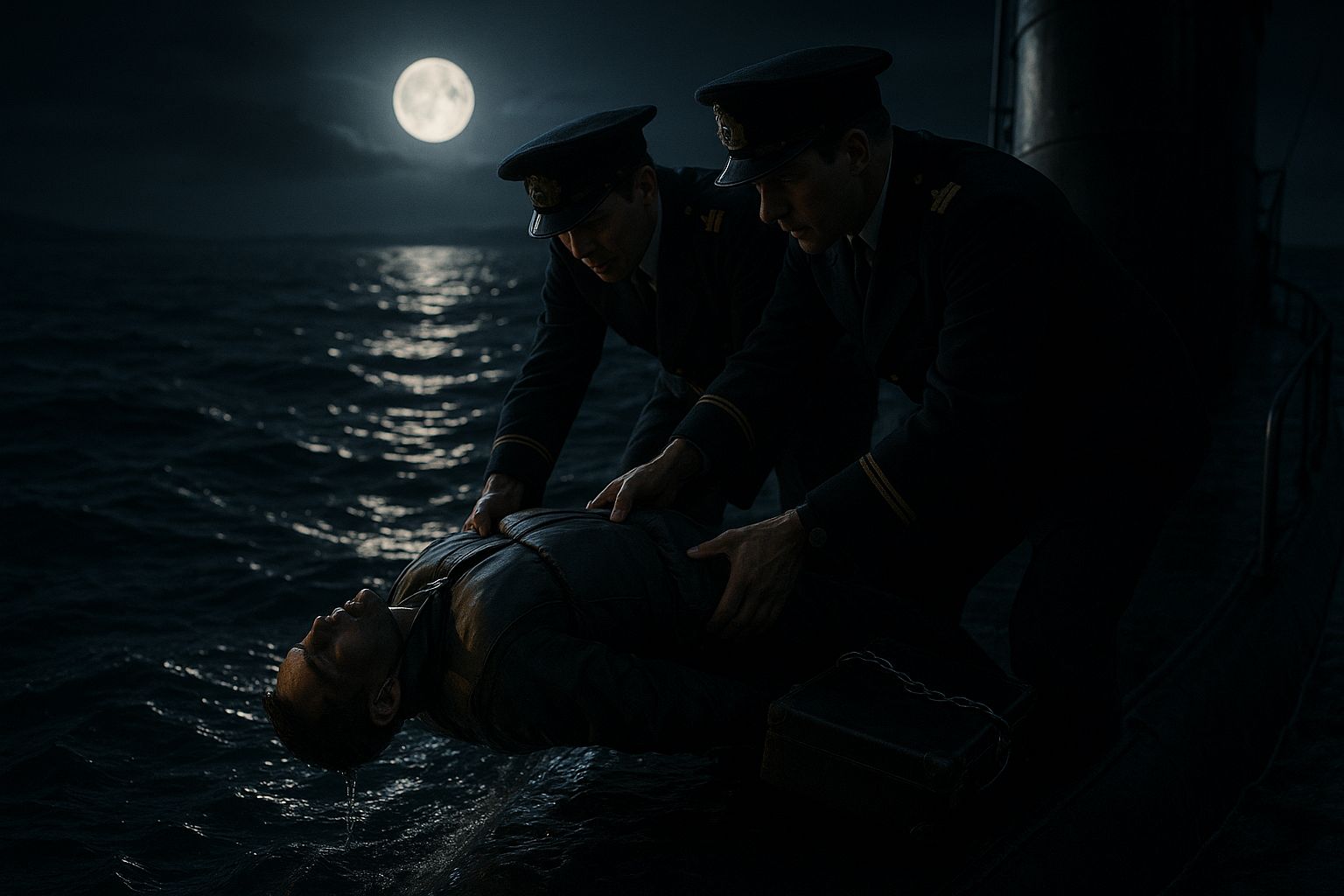
On April 19, 1943, the body of “Major Martin” was placed aboard the British submarine HMS Seraph. Under the cover of night, the submarine surfaced off the coast of Huelva, Spain — a region where German agents had strong contacts in the Spanish government and military.
The crew gently set the body adrift, chained briefcase still attached to his wrist. The hope was that Spanish authorities would recover it and, while officially returning it to the British, secretly pass its contents to the Germans.
The Germans take the bait
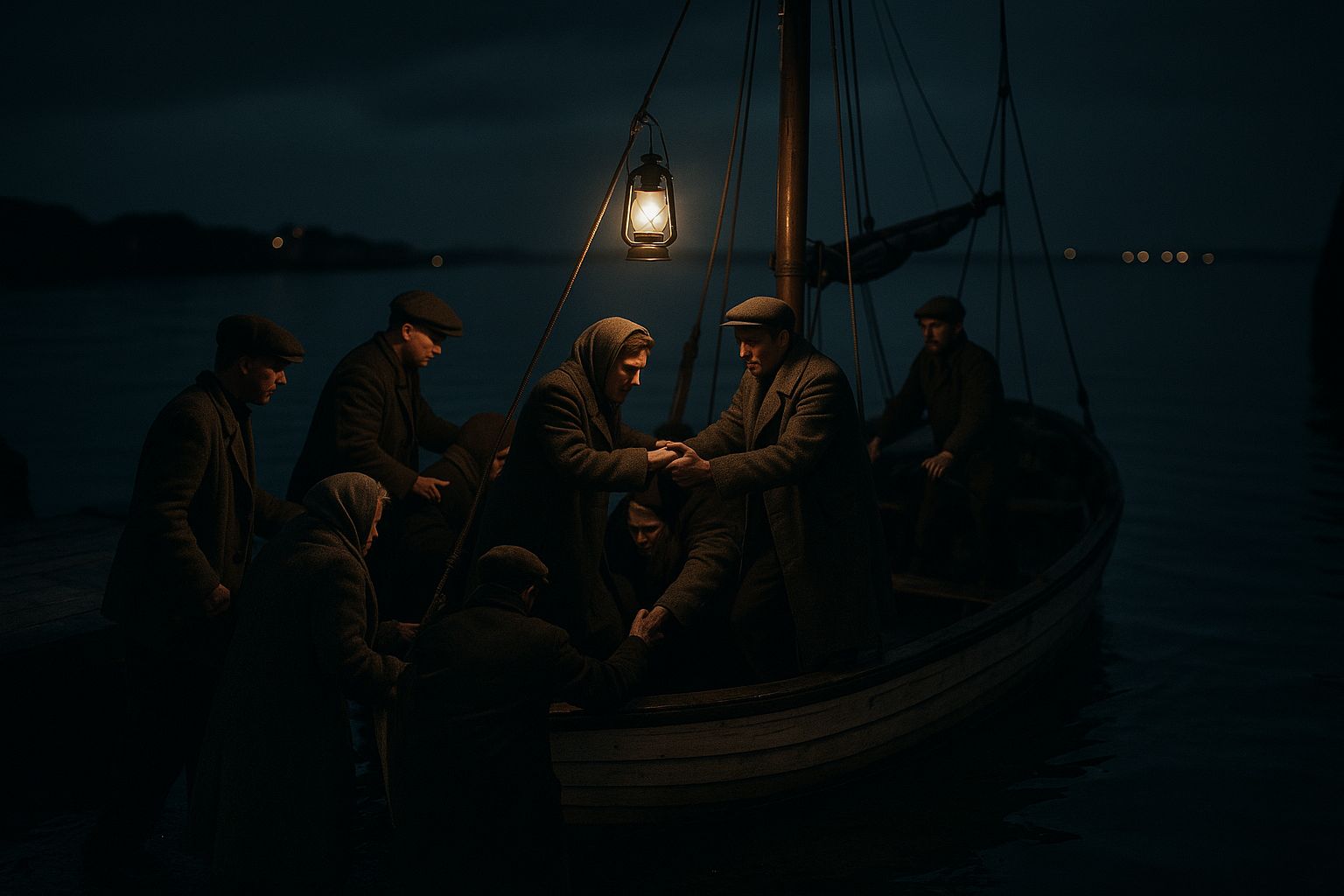
Spanish fishermen found the body, and local authorities quickly involved both British and German representatives.
As anticipated, the documents were secretly photographed and sent to German intelligence headquarters. The chain of custody was messy enough to allow “plausible deniability” for the British — but clean enough for the Germans to believe they had scored a coup.
In Berlin, the material was analysed by Admiral Karl Dönitz’s staff and ultimately shown to Hitler.
It confirmed their pre-existing bias: that the Allies would avoid Sicily and strike Greece instead.
Hitler ordered reinforcements to Greece and the Balkans, diverting critical resources away from Sicily.
The impact on Operation Husky
On July 9, 1943, the Allies launched Operation Husky — the real invasion of Sicily. While still heavily defended, the island had fewer troops and aircraft than it otherwise would have.
The diversion caused by Operation Mincemeat likely saved thousands of Allied lives and accelerated the collapse of Italian resistance.
Why Operation Mincemeat worked
1) It aligned with enemy expectations
The Germans already suspected an invasion of Greece was possible. The documents fit neatly into their existing worldview, making them less likely to question their authenticity.
2) The details sold the story
The personal items — love letters, receipts, photos — humanised “Major Martin.” Intelligence work often hinges on small, human-scale details rather than grand gestures.
3) Controlled leaks in a neutral country
Spain’s neutrality gave the perfect cover for the documents to “accidentally” fall into German hands without looking staged.
4) Timing and urgency
The operation was timed to allow the Germans to act on the information without leaving them enough time to discover the deception before the real invasion.
Aftermath and post-war revelations
The true story of Operation Mincemeat remained classified for decades. In 1953, Ewen Montagu published The Man Who Never Was, a memoir that revealed some, but not all, of the details. It became a best-selling book and was adapted into a film.
Later research uncovered Glyndwr Michael’s real identity and the meticulous planning behind the ruse.
His grave in Huelva now bears both his false and true names, a unique memorial to one of WWII’s most unusual heroes.
Legacy in military deception
Operation Mincemeat became a case study in successful deception, influencing Cold War espionage and modern information warfare.
Its principles — build a believable narrative, layer it with authentic detail, and play to the opponent’s assumptions — remain relevant today.
It also demonstrated that wars aren’t won only on battlefields. Sometimes, a carefully placed lie can move armies just as effectively as tanks.
Why this story still resonates
It’s the perfect blend of dark absurdity and high stakes: a dead man as a weapon, a forged love life, and a gamble that changed the balance of power in the Mediterranean.
For anyone fascinated by WWII resistance and espionage, Operation Mincemeat is a reminder that creativity can be as decisive as firepower.
Must read:
WWII’s Weirdest Propaganda Campaigns (and Whether They Worked)
Sources
The National Archives (UK) — Operation Mincemeat Files
https://www.nationalarchives.gov.uk/education/worldwar2/g3/cs3/g3cs3s.htm
Montagu, Ewen — The Man Who Never Was (1953)
https://archive.org/details/manwhoneverwasew00mont
BBC History — Operation Mincemeat
https://www.bbc.co.uk/history/worldwars/wwtwo/mincemeat_01.shtml
Imperial War Museums — Deception in WWII
https://www.iwm.org.uk/history/how-a-dead-body-and-a-bundle-of-forged-papers-tricked-the-nazis
Macintyre, Ben — Operation Mincemeat (2010)
https://www.penguinrandomhouse.com/books/114048/operation-mincemeat-by-ben-macintyre/