The Great Train Robbery of the Polish Partisans
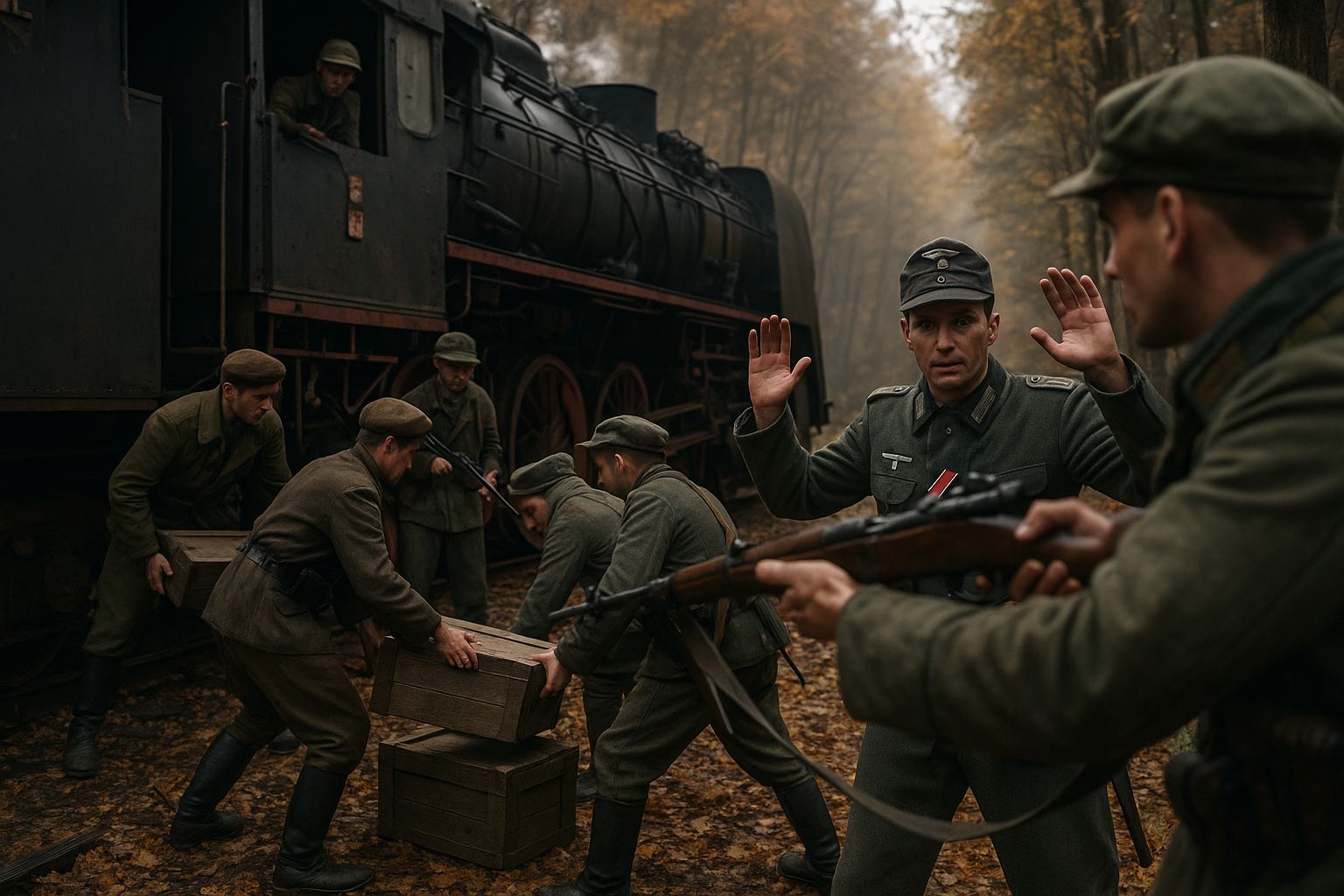
Polish Partisan Capturing and Looting a Nazi Train
Polish Partisan Capturing and Looting a Nazi Train
Quick take
In 1943, a team of Polish partisans stopped and looted a Nazi supply train in broad daylight — making off with weapons, ammunition, and funds for the resistance.
It wasn’t just a daring heist; it was a morale-boosting masterstroke of guerrilla warfare.
Occupation and resistance in Poland
By 1943, Poland had been under brutal Nazi occupation for nearly four years. The German regime imposed curfews, rationing, forced labour, and mass arrests. Resistance was coordinated largely by the Armia Krajowa (AK), or Home Army, a clandestine military organisation that engaged in sabotage, intelligence-gathering, and armed uprisings.
The AK knew that disrupting German supply lines could cripple local occupation forces and arm their own fighters — but attacking a train was dangerous. Railway routes were heavily guarded, and German reprisals against civilians were swift.
The target: a supply and payroll train
Intelligence reached the AK about a regular supply train moving through the Radom–Warsaw line carrying military equipment, uniforms, and — crucially — payroll funds for German troops.
Capturing it would be a logistical and propaganda win.
Planning the operation
The plan hinged on precision and timing. The partisans selected a stretch of track near a forested area that provided cover for both the ambush and the escape.
Scouts observed the train schedule for weeks, noting guard rotations and locomotive speed. They also prepared obstacles to force the train to halt at exactly the right spot.
The sabotage team prepared “torpedoes” — small explosive charges designed to damage the tracks enough to stop the train but not derail it catastrophically.
This would leave the cargo intact and reduce civilian casualties among any railway workers onboard.
The day of the heist
On the chosen morning in autumn 1943, the team — about 30 fighters armed with rifles, pistols, and grenades — took positions in the woods. As the train approached, the charges detonated, halting it abruptly.
Within seconds, partisans swarmed the locomotive and guard cars, engaging in short, fierce firefights with German soldiers.
Using the element of surprise, the partisans overpowered the guards, disconnected the locomotive, and began unloading the cargo. Ammunition crates, rifles, medical supplies, and sacks of Reichsmarks were carried to waiting carts and concealed wagons hidden in the forest.
The getaway
Speed was everything. The partisans knew German reinforcements could arrive within minutes. The stolen goods were loaded onto horse-drawn carts and dispersed along multiple escape routes, making it nearly impossible for pursuing forces to recover the loot.
Within an hour, the site was abandoned — except for the halted, now-useless train.
Aftermath and impact
The Germans launched an investigation and combed nearby villages, but the partisans had planned well: local civilians knew nothing, and those who might have guessed remained silent.
The captured supplies were distributed among AK units in the region, boosting their operational capacity.
The stolen payroll funds allowed the AK to purchase black-market ammunition, bribe informants, and support the families of fighters who had been killed or arrested.
The propaganda value was immense: the story of the “Great Train Robbery” spread quickly, inspiring both fighters and civilians.
Why it worked
1) Meticulous preparation
Weeks of surveillance meant the partisans knew the train’s exact schedule, guard numbers, and cargo layout.
2) Controlled use of explosives
Damaging the tracks without causing a derailment ensured the cargo was usable and avoided needless civilian casualties.
3) Multiple escape routes
Splitting into small groups after the raid reduced the chance of a complete capture and allowed the stolen goods to vanish into the countryside.
The risks
Had the operation failed, the reprisals would have been devastating. The Germans routinely executed hostages and razed villages in retaliation for resistance actions. Every participant knew the price of capture: torture, execution, or deportation to a concentration camp.
The role of the Armia Krajowa
The AK was the largest underground resistance movement in occupied Europe. Operations like the train robbery demonstrated their ability to strike high-value targets with limited resources.
It also showcased their reliance on local support — without sympathetic civilians, such actions would have been impossible.
Legacy
The Great Train Robbery became a symbol of the AK’s ingenuity and daring. It was celebrated in underground newspapers and whispered about in occupied cities.
After the war, it was recounted in memoirs and military histories as an example of classic guerrilla tactics: hit hard, vanish fast, and turn the enemy’s resources to your advantage.
Why this story still resonates
It blends the thrill of a heist with the high stakes of resistance warfare. Beyond the drama, it’s a reminder that war is fought not only in grand battles but in small, calculated strikes that shift momentum and morale.
If you enjoyed this, read about other daring partisan operations like Operation Mincemeat, Operation Gunnerside, and the bicycle couriers of the Dutch resistance.
Must read:
Nancy Wake: The White Mouse Who Turned Nerve Into Strategy
Sources
Norman Davies — Rising ’44: The Battle for Warsaw
https://www.penguinrandomhouse.com/books/35315/rising-44-by-norman-davies/
Armia Krajowa Museum — Operations Archive
https://muzeum-ak.pl/
BBC Witness History — Polish Partisan Raids
https://www.bbc.co.uk/programmes/p00p0d7z
Polish Institute and Sikorski Museum — Resistance Records
https://www.pism.co.uk/
Warsaw Uprising Museum — Resistance Sabotage
https://www.1944.pl/en
 The Bicycle Spies of the Netherlands: Pedalling Past the Occupation
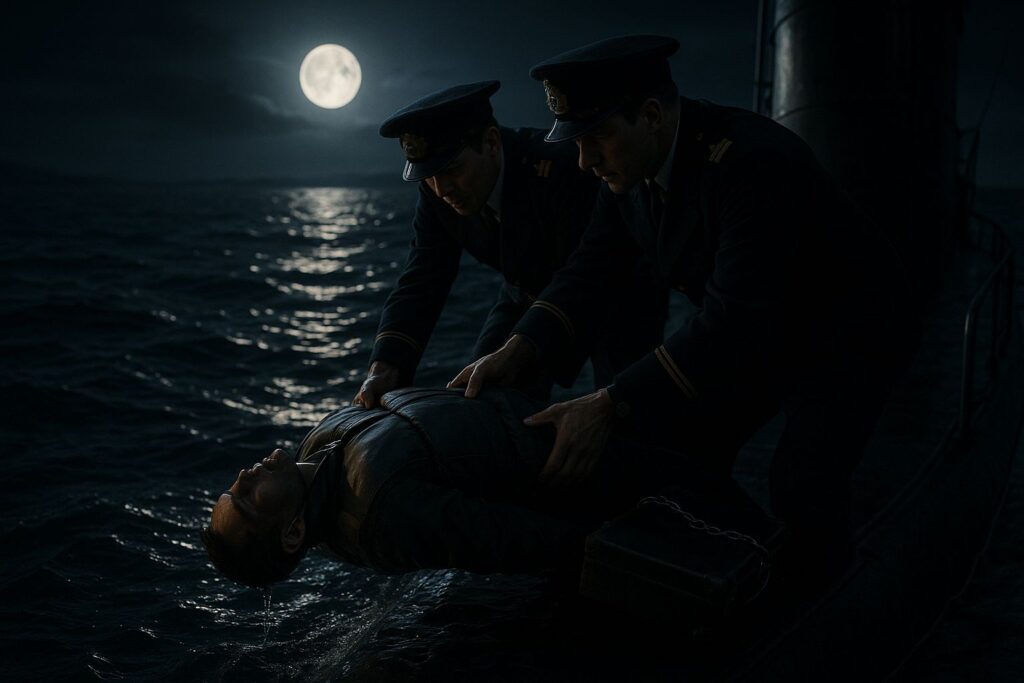 Operation Mincemeat: The Corpse That Changed the Course of WWII