Marie Antoinette: Icon, Victim, or PR Disaster?
Marie Antoinette
Marie Antoinette
Marie Antoinette has lived many lives. To some, she’s the ultimate fashion icon, a queen of cake and couture. To others, she’s the clueless symbol of aristocratic excess — the doomed face of the Ancien Régime. But who was the real Marie Antoinette? And how did a teenage Austrian archduchess become the most notorious queen in European history?
Born for the Spotlight (Sort Of)
Born in 1755, Maria Antonia Josepha Johanna was the 15th child of Empress Maria Theresa of Austria. At 14, she was married off to the French dauphin, Louis-Auguste, as a political alliance meant to ease centuries of rivalry between Austria and France. When she arrived in Versailles in 1770, she became Marie Antoinette, the dauphine of France — awkward, barely French-speaking, and instantly judged by a hypercritical court.
By 1774, she was queen. But power didn’t come with love or respect. Her marriage was unconsummated for seven years, she struggled with the strict etiquette of Versailles, and she became an easy scapegoat for everything wrong in France.
Let Them Eat… Propaganda?
Contrary to popular myth, Marie Antoinette never said “Let them eat cake.” That quote was attributed to her long after her death. Still, it stuck — because it felt true to many in France. Why?
Because the queen was the perfect villain in an era of collapsing monarchies. As France slid into financial ruin, the public needed someone to blame. The king was clumsy and indecisive. The queen, on the other hand, wore diamonds, threw masked balls, and retreated to her faux village at the Petit Trianon where she played shepherdess in silk.
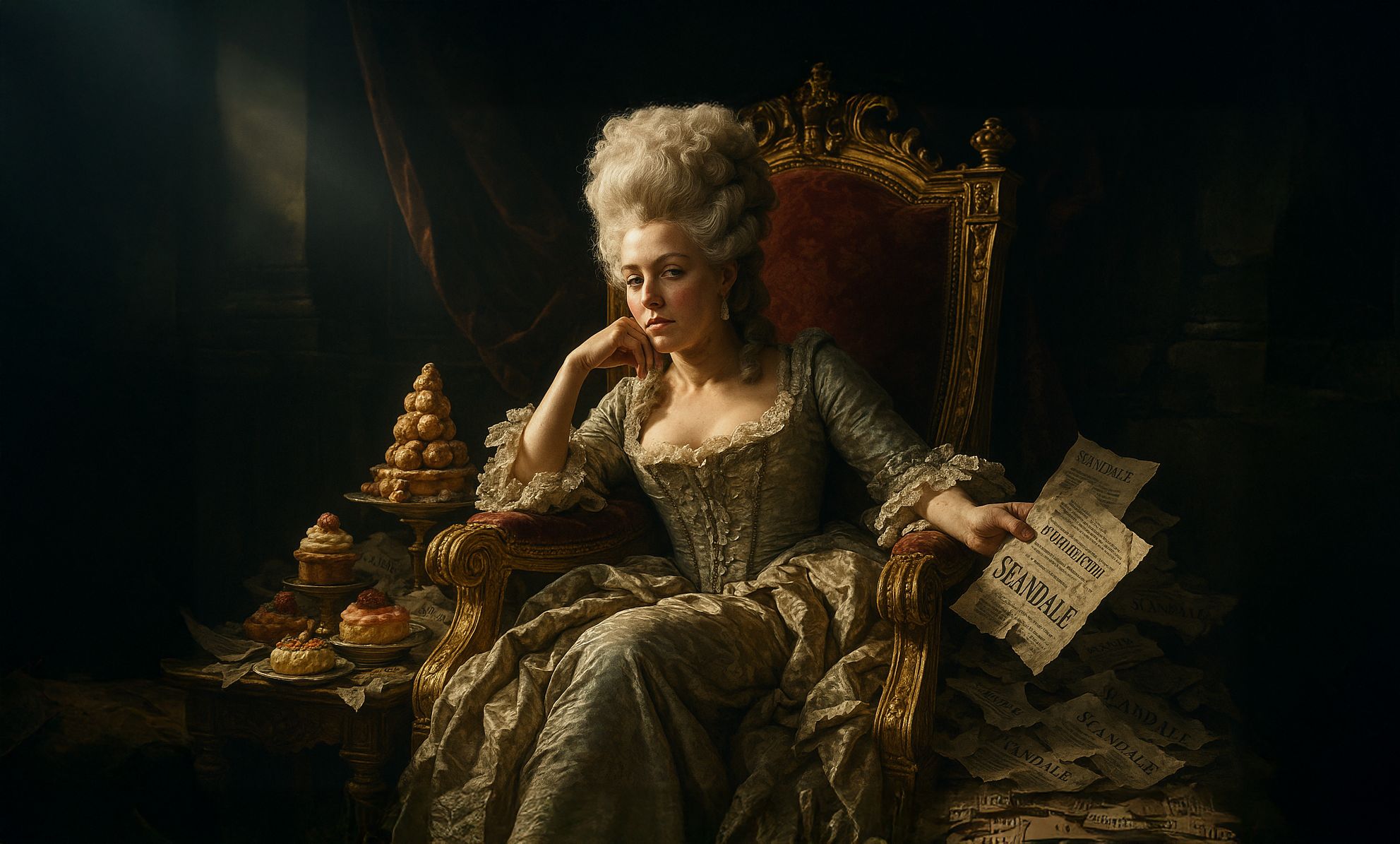
Revolutionary pamphlets called her “Madame Deficit.” Satirical cartoons depicted her as a wasteful foreigner, a sexual deviant, even a traitor to France. And the press — newly unchained in the 1780s — printed every detail of her rumored affairs, secret spending, and imagined betrayals.
Was She a Fashion Victim or Revolutionary?
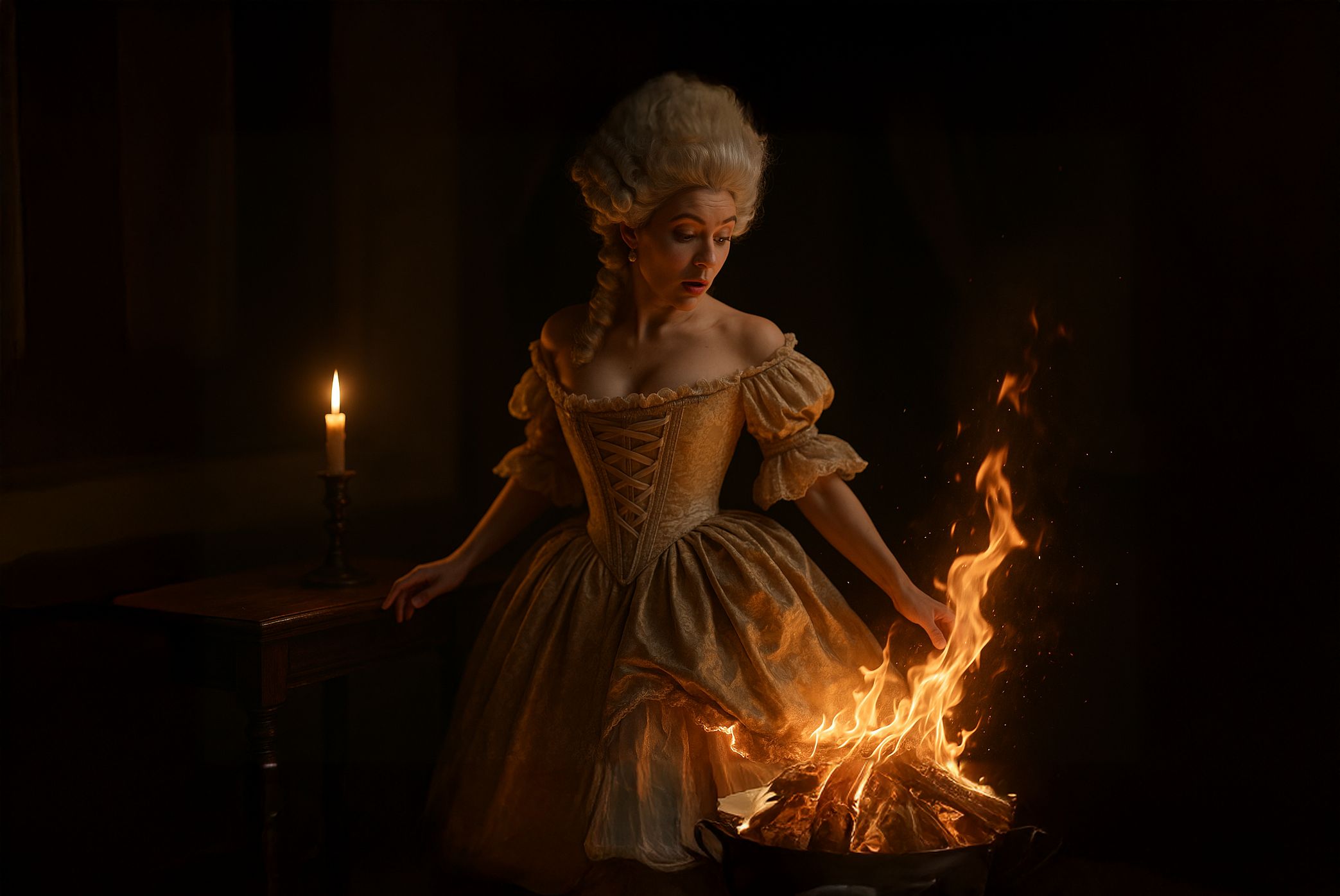
Marie Antoinette changed fashion — and how women engaged with power. Her towering pouf wigs carried coded political messages (and even miniature ships). Her shift to simpler muslin gowns, known as “chemise à la reine,” scandalized the court but inspired fashion across Europe. Critics claimed she was undermining royal dignity. Admirers saw a bold new feminine image.
In many ways, she embodied a modern celebrity: using image and personal style to build a brand. But in a pre-Instagram world, her audience turned on her.
The Affair of the Diamond Necklace
This 1785 scandal sealed her fate in the public eye — and she wasn’t even involved. A shady countess tricked Cardinal Rohan into believing the queen wanted him to buy a ridiculously expensive diamond necklace. When the scheme collapsed, the public believed the queen was behind it. It fed the narrative: Marie Antoinette = manipulative, greedy, foreign, dangerous.
She never recovered.
Queen, Mother, and Political Pawn
Behind the wigs and whispers, Marie Antoinette was a mother of four — two of whom died young. Letters between her and her mother (and later her brother, Emperor Joseph II) show a woman trying to be politically relevant but trapped in a system that wanted her silent or glamorous, but not strategic.
She advised Louis XVI poorly on reforms and tried to play mediator between moderate reformers and hardline royalists. It backfired. She became “L’Autrichienne” — the Austrian witch — in the revolutionary imagination.
The Trial and the Guillotine
After the monarchy fell in 1792, Marie Antoinette was imprisoned, separated from her children, and put on trial for treason. Her crimes included: sending state secrets to Austria, bankrupting France, and — most outrageously — incest with her son (a charge so vile it stunned even revolutionary spectators).
She was found guilty. On October 16, 1793, she was guillotined at age 37. Witnesses described her dignity and calm in her final moments.
Legacy: Icon, Victim, PR Disaster — or All Three?
So who was Marie Antoinette?
- Icon: Her fashion, art patronage, and personal charisma shaped a generation. She remains a muse for designers, artists, and filmmakers.
- Victim: She was scapegoated for systemic failures she didn’t create. Her letters show a woman far more nuanced than her public image.
- PR Disaster: She underestimated the power of public opinion. Her attempts at retreat (Petit Trianon) and reinvention (muslin gowns) only fueled resentment.
In the end, Marie Antoinette became a myth — both sinner and saint. Her story is a cautionary tale about image, gender, and how power is perceived in public life.
Must read:
Fashion So Dangerous It Killed People: The Deadliest Trends of the 18th Century
Sources
BBC History
https://www.bbc.co.uk/history/historic_figures/antoinette_marie.shtml
Versailles Official Archives
https://en.chateauversailles.fr/discover/history/great-characters/marie-antoinette
The Guardian
https://www.theguardian.com/world/2020/oct/16/marie-antoinette-legacy-queen-guillotine
Letters of Marie Antoinette
https://digitalcollections.nypl.org/collections/the-marie-antoinette-papers