Eva Braun, Hitlers Mistress & The Wives of the Nazi Inner Circle
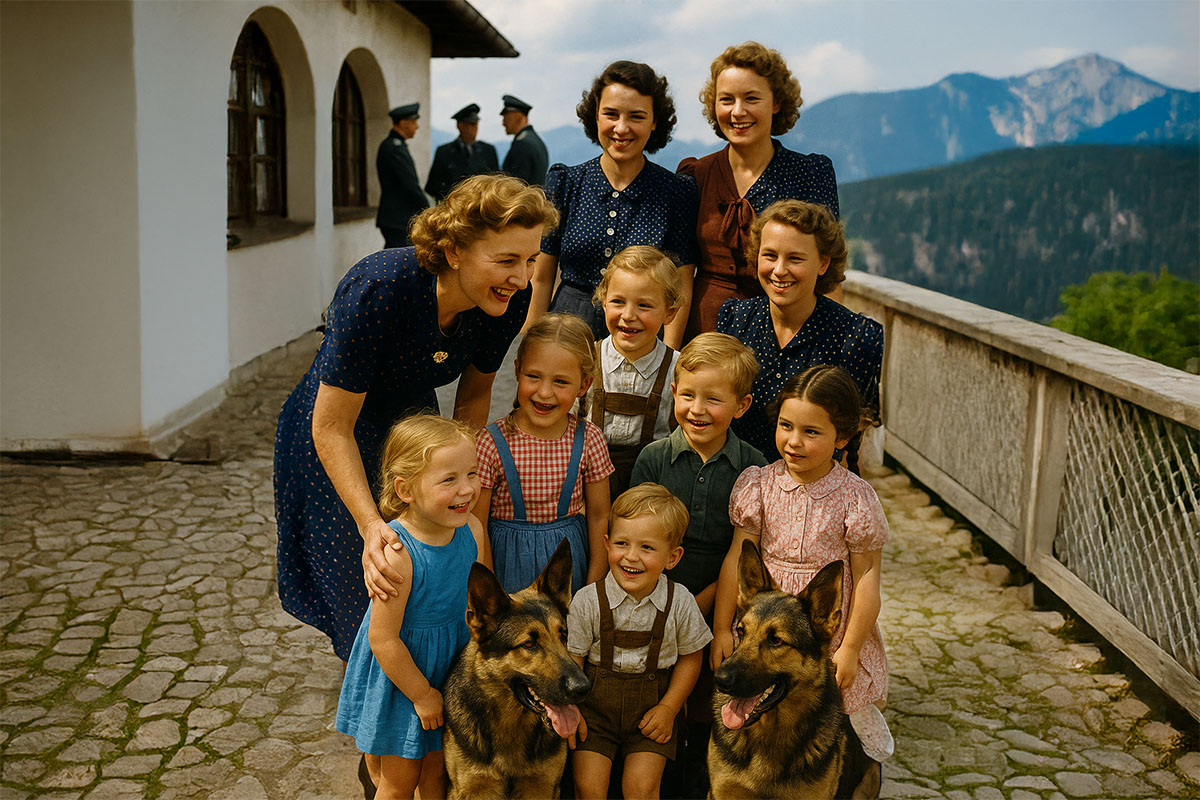
Eva Braun with the Nazi Wives. Color photo of the mistresses
Eva Braun entertaining the Nazi Wives and their kids at Berghof (created with AI)
Introduction: More Than Just Men in Uniform
When we picture Nazi Germany, the cast is overwhelmingly male — uniforms, mustaches, medals. But behind the official propaganda and power structures was a quieter layer of influence: the women who stood just outside the spotlight, shaping, surviving, and sometimes supporting the regime in ways history hasn’t always captured.
At the heart of this circle was Eva Braun — Hitler’s longtime misstress and companion, rarely seen publicly, but ever-present in his private world. Around her were wives, secretaries, lovers, and ideological devotees whose lives offer a haunting window into how everyday women navigated life inside a dictatorship.
Let’s meet the women in Hitler’s orbit — and explore what their presence tells us about gender, power, and complicity in Nazi Germany.
Young Eva Braun: The Invisible First Lady
The Private Companion
Eva Braun lived most of her adult life in Hitler’s shadow. Never officially married until hours before their death, she occupied an ambiguous place — not quite a partner in power, but certainly more than a bystander.
She lived at Hitler’s Alpine retreat, Berghof, where she hosted friends, filmed home movies, and was surrounded by Nazi elites. She wasn’t a policymaker, but she had proximity — the kind that shaped perception and mood. Historians still debate how much she knew or cared about the regime’s horrors, but one thing is clear: she chose loyalty and luxury over truth and resistance.
“Just a Girl in Love”?
Eva often wrote like a teenager — obsessed with fashion, photos, and “Adi.” Her letters and diaries show little interest in politics. But her deliberate apoliticism becomes harder to excuse when seen against the context of mass murder.
She wasn’t a puppet. She made choices. And in doing so, she became the face of willful ignorance at the core of the Nazi inner circle.
The Nazis’ Wives, Mistresses, and Loyalists
Magda Goebbels: The Perfect Nazi Woman?
If Eva Braun was invisible, Magda Goebbels was the opposite — glamorous, vocal, devoted. As the wife of Propaganda Minister Joseph Goebbels, she was a model of Aryan womanhood: photogenic, stylish, mother to six blond children.
But behind the scenes, Magda was fiercely ideological. She idolized Hitler, calling him “my Führer” even in personal letters. In 1945, rather than face defeat, she murdered all six of her children in the Führerbunker before taking her own life. Her story is one of fanaticism disguised as maternal devotion.
Unity Mitford: Hitler’s Fangirl from England
Yes, really. Unity Valkyrie Mitford was a British aristocrat and one of Hitler’s biggest fans. She moved to Munich, ingratiated herself with Nazi elites, and even sat at Hitler’s table regularly. When war broke out, she was so distraught that she attempted suicide in an English park.
She survived — but with lasting injuries. Her life is a bizarre, disturbing example of how charisma and ideology can seduce from afar.
Gerda Bormann: Devoted and Dangerous
The wife of Hitler’s private secretary Martin Bormann, Gerda was one of the most openly supportive Nazi wives. A devout Catholic turned party loyalist, she proudly raised her children under Nazi ideals and wrote letters endorsing racial purity and loyalty to the Reich.
Unlike Braun or even Goebbels’ children, Gerda’s role wasn’t passive — she was ideologically engaged and proud of it.
The Secretaries and Staffers
Traudl Junge: “Too Young to Know”?
Traudl Junge was just 22 when she became one of Hitler’s personal secretaries. She typed his last will and testament in the bunker. After the war, she claimed she had no idea what was happening outside the walls of the Reich Chancellery.
In later interviews, she expressed deep regret, saying, “I was fascinated by him, and I was too young to understand.”
Her story became the basis for parts of the film Downfall, and serves as a case study in how youth and charm can blur moral responsibility.
Christa Schroeder & Johanna Wolf
Two more secretaries, Schroeder and Wolf, served Hitler for over a decade. Both were trusted, close, and privy to key events. After the war, they were interrogated and released. Their testimonies helped shape our understanding of Hitler’s daily life — but also raised questions about how much they chose not to see.
The Women Beyond the Circle
Leni Riefenstahl: The Artist and the Regime
A talented filmmaker, Leni Riefenstahl directed some of the most iconic propaganda films of the Nazi era, including Triumph of the Will. She later claimed she was “just an artist,” not responsible for politics.
But her work glorified Hitler and helped build his myth. Her denial of guilt remains controversial — and prompts difficult questions about art, complicity, and image-making.
The “Ordinary” Women of the Reich
While elite women lived in Hitler’s circle, millions of German women supported the war effort: as nurses, factory workers, mothers, teachers, and yes — sometimes as denouncers or concentration camp guards.
The Nazi regime heavily promoted motherhood and obedience, rewarding women for large families and discouraging careers. But it also relied on them to sustain the machinery of war and ideology.
Their stories are varied: some were complicit, others victims, many both. It’s impossible to separate the personal from the political when the entire society was mobilized toward destruction.
Conclusion: Gender Doesn’t Equal Innocence
The women around Hitler — from lovers and secretaries to propagandists and everyday citizens — complicate our understanding of power and guilt.
They didn’t sign the orders. They didn’t command armies. But they shaped the tone, carried the lies, and sometimes believed them deeply.
Eva Braun may not have run the Reich, but she lived comfortably inside its walls. And so did many other women, in ways that deserve closer, more honest reflection.
Sources
- Heike B. Görtemaker, Eva Braun: Life with Hitler
https://www.penguinrandomhouse.com/books/214354/eva-braun-by-heike-b-gortemaker/ - Smithsonian Magazine – What Eva Braun’s Home Movies Reveal About Hitler
https://www.smithsonianmag.com/history/what-eva-brauns-home-movies-reveal-about-hitler-128407/ - The Guardian – Magda Goebbels: The True Believer
https://www.theguardian.com/world/2015/apr/14/magda-goebbels-mother-of-all-monsters - The Atlantic – Leni Riefenstahl’s Films and Her Legacy
https://www.theatlantic.com/entertainment/archive/2015/04/leni-riefenstahl/389892/ - BBC – Unity Mitford and Hitler’s British Obsession
https://www.bbc.com/culture/article/20140916-hitlers-british-crush - Interview with Traudl Junge in Blind Spot: Hitler’s Secretary
https://www.imdb.com/title/tt0318725/ - Women in Nazi Germany – United States Holocaust Memorial Museum
https://encyclopedia.ushmm.org/content/en/article/women-in-nazi-germany