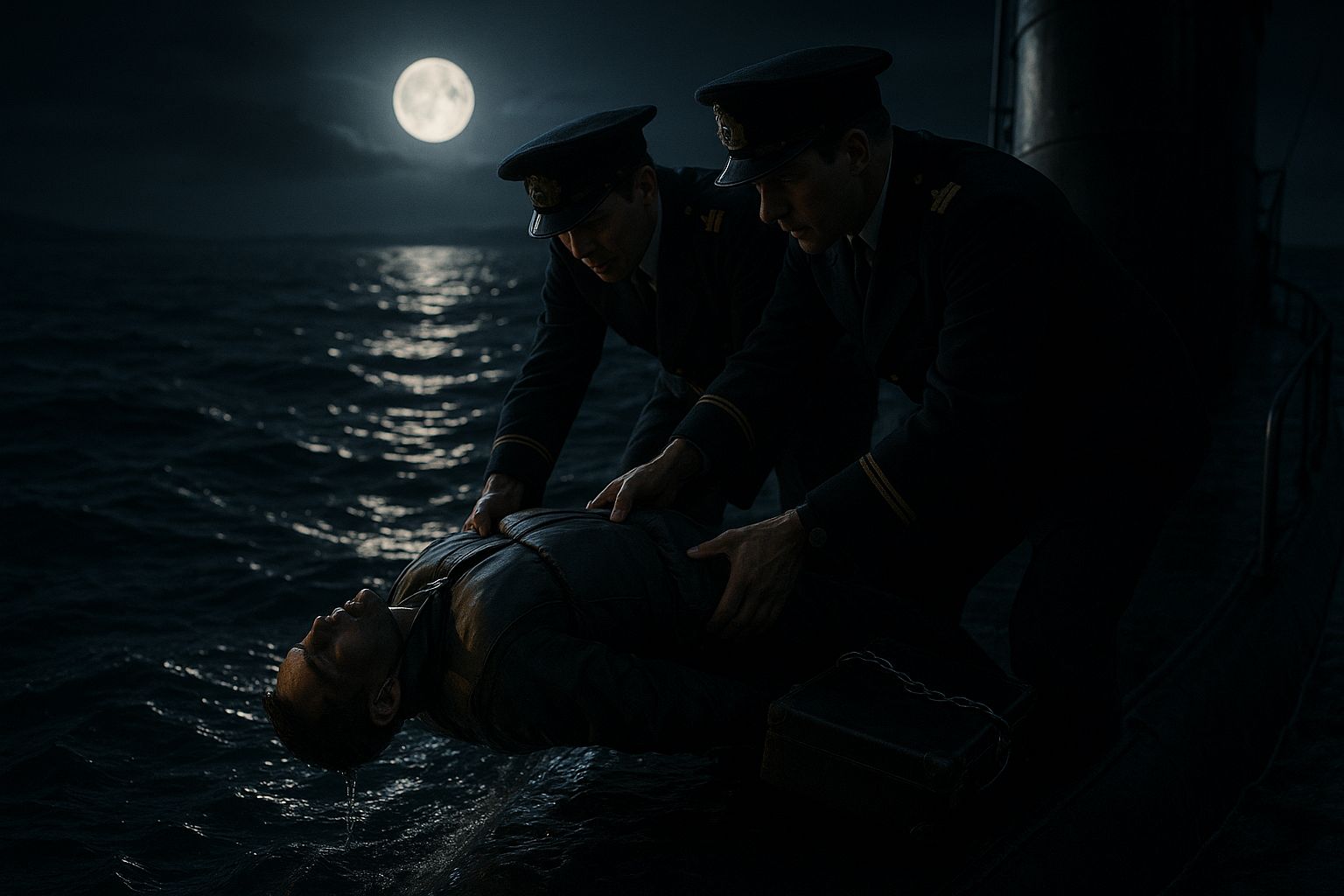
The Danish Fishing Boat Exodus: A Nation’s Quiet Evacuation of Jews
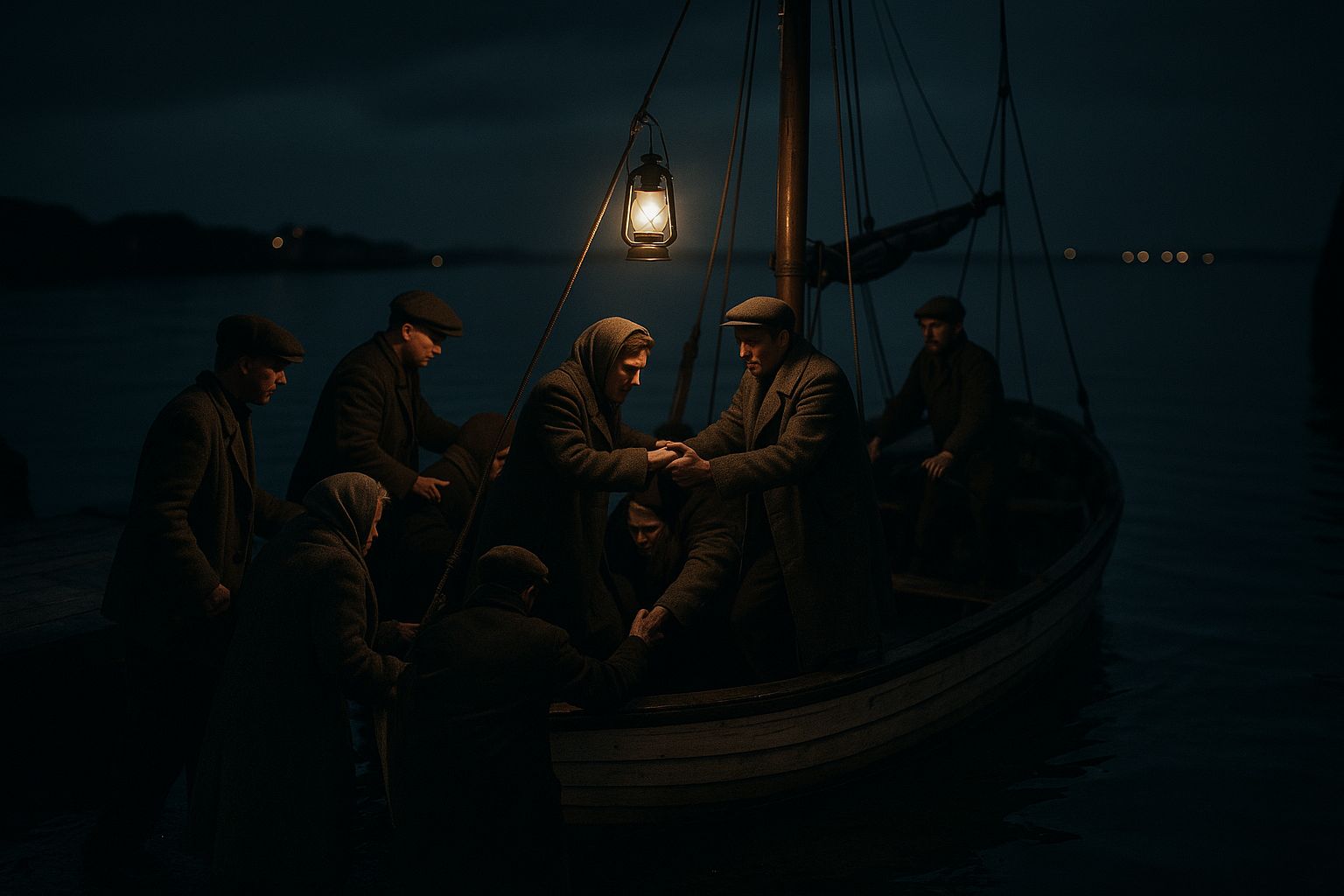
Danish Fishing Boats Rescuing Jews to Sweden
Danish Fishing Boats Rescuing Jews to Sweden
Quick take
In October 1943, Denmark pulled off one of the most successful mass rescues of WWII. In less than a month, fishermen, dockworkers, and ordinary citizens ferried nearly 8,000 Jews across the Øresund to neutral Sweden — under the watch of Nazi occupiers who had planned their deportation.
It was resistance without rifles, powered by courage and coordination.
Occupation and uneasy cooperation
Germany occupied Denmark in April 1940. Unlike other occupied nations, Denmark retained a measure of self-rule in the early years, with its government and king still in place.
The Germans saw the Danes as “racially acceptable” and strategically useful for agriculture and shipping. This arrangement allowed daily life to continue with fewer overt disruptions — until 1943.
That summer, Danish frustration with the occupation boiled over into strikes, sabotage, and street protests. In response, Germany dissolved the Danish government in August.
Full military control was imposed, and repression intensified. In late September, the Nazi envoy in Copenhagen received orders to deport the country’s Jewish population to concentration camps.
The tip-off that changed everything
Word of the planned deportations came from an unlikely source: German diplomat Georg Ferdinand Duckwitz, who quietly warned Danish politicians and Jewish community leaders.
The operation was scheduled for the night of October 1–2, 1943. That gave the Danes only days to act.
Mobilising a rescue network
The response was immediate and decentralised. Families opened their homes as safe houses. Doctors admitted Jewish patients under false names. Priests hid Torah scrolls in churches.
The key: get people to the coast, and from there, across the narrow stretch of water to Sweden — just a few miles at the closest point.
The fishermen’s role
Fishing boats were the lifeline. From harbours like Gilleleje, Snekkersten, and Dragør, skippers ferried small groups — sometimes hidden in fish holds — across the Øresund under cover of darkness.
Trips had to be timed with tides, patrol schedules, and moonlight. Some fishermen charged modest fees to cover fuel and risk; others refused payment entirely.
The risks at sea
German patrol boats and coastal sentries posed constant threats. A sudden search could expose passengers crammed into the bilge. If caught, both the refugees and their helpers faced imprisonment or deportation.
To reduce risk, boats often left with “legitimate” fishing gear on deck, the catch masking the human cargo below.
Logistics and scale
Moving thousands of people in under a month required remarkable coordination. Couriers relayed departure times. Families were split into small groups to avoid mass arrests if a single boat was intercepted.
Some refugees made several overland moves before even reaching the shore, changing hideouts nightly to stay ahead of informants.
The human stories
One oft-told account is of a family arriving at a harbour minutes before departure, only to be told there was no room. The skipper, unwilling to leave them behind, lashed a small dinghy to his boat and towed them across.
Another tells of a fisherman’s young daughter who kept watch on the pier, whistling softly if a German patrol appeared, giving her father time to delay departure until the coast was clear.
German response
The Nazis were caught off guard by the speed and scale of the escape. In total, they captured fewer than 500 Danish Jews — most of whom were sent to Theresienstadt, where Denmark successfully lobbied for better treatment and regular Red Cross visits.
The vast majority — roughly 95% of the Jewish population — reached safety in Sweden.
Why the rescue succeeded
1) Early warning
The tip-off from Duckwitz gave the Danes precious days to act, turning what could have been a surprise raid into a national mobilisation.
2) Geography
The short distance to Sweden made small-boat crossings feasible, even in poor weather, and allowed for multiple trips per night.
3) Public support
This was not a small underground cell’s operation — it was a national effort, with thousands of ordinary Danes contributing in ways big and small.
4) Decentralisation
No single leader meant no single point of failure. If one route was compromised, others kept running.
After the crossing
In Sweden, refugees were given housing, medical care, and the chance to work or study until the war’s end. Many returned to Denmark in 1945 to find their homes and synagogues largely intact — another testament to the way their fellow citizens had protected not just lives but heritage.
Legacy
The Danish Fishing Boat Exodus is remembered as one of the most successful civilian rescue operations in modern history. Monuments stand in coastal towns, and museums preserve the fishing boats that carried families to safety.
In 2013, on the 70th anniversary, surviving refugees and rescuers gathered in both Denmark and Sweden to mark the event, their stories now part of the national identity of both countries.
Why this story still resonates
Because it proves that resistance is not only about sabotage and combat. Sometimes it’s about ferrying strangers across dark water, night after night, until the work is done.
It’s about the quiet logistics of kindness under extreme pressure — and the moral clarity to act when others are in danger.
If this story struck you, continue with Operation Gunnerside — Norway’s ski commandos who crippled Nazi nuclear ambitions — or the tale of Nancy Wake, the SOE agent who turned charm into a weapon.
Must read:
The Bicycle Spies of the Netherlands: Pedalling Past the Occupation
Sources
United States Holocaust Memorial Museum — Rescue in Denmark
https://encyclopedia.ushmm.org/content/en/article/rescue-in-denmark
Museum of Danish Resistance
https://en.natmus.dk/museums-and-palaces/museum-of-danish-resistance/
Yad Vashem — The Rescue of Denmark’s Jews
https://www.yadvashem.org/righteous/stories/denmark.html
Georg Ferdinand Duckwitz biography — German Federal Archives
https://www.bundesarchiv.de/EN/Content/EN-Home/home-page.html