Witches, Bonfires & Midsummer Fear: The Dark History of Sankt Hans
A Danish Sankt Hans Tradition With Bonfire and Fun
A Danish Sankt Hans Tradition With Bonfire and Fun
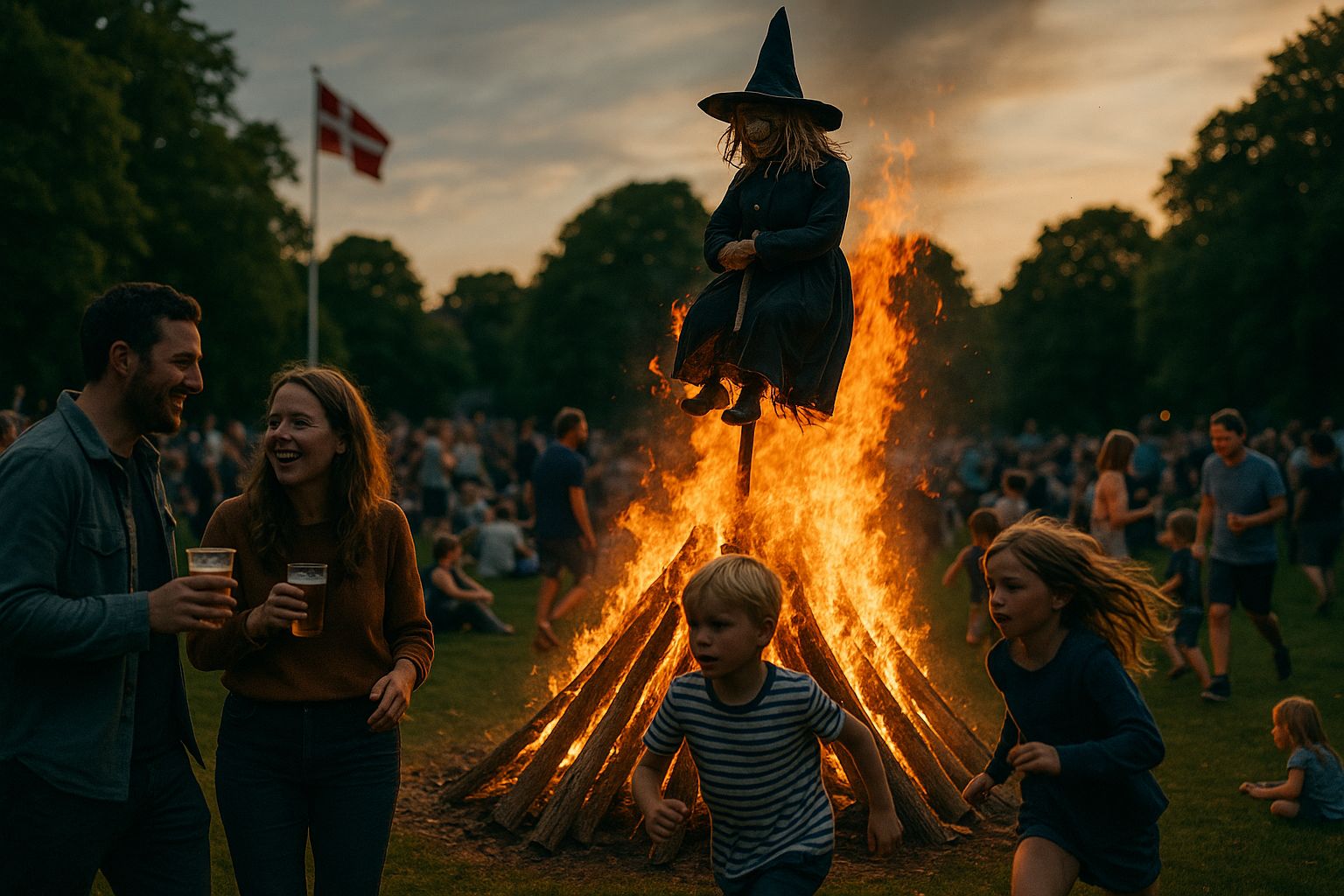
Today is the annual bonfire tradition of “Sankt Hans” in Denmark—a night where we pile up wood, douse it in gasoline, and set fire to a homemade doll meant to look like a witch. It’s strange, really, how such a dark piece of history has turned into a cozy community event. So let’s dive in and figure out the bits and pieces of this festivity.
Where Fire Meets Folklore
Every year on the night of June 23rd, Danes light massive bonfires across beaches and hillsides to mark Sankt Hans Aften — Midsummer’s Eve. Today it’s a cozy, slightly eerie celebration filled with song, drinks, and wooden witch effigies tossed into flames. But this tradition has deep, dark roots — tangled in medieval fears, persecution, and ancient rituals meant to drive out evil.
So what’s with the burning witches? Why midsummer? And did actual witch trials ever happen on this warm, festive night? Let’s dive into the haunted history behind the glow.
The Pagan Roots of Midsummer Fires
🔥 Before Christianity: Solstice Fire Magic
Long before Sankt Hans became tied to John the Baptist (Hans = Johannes), European cultures already celebrated the summer solstice with fire. These fires weren’t just pretty — they were powerful. People believed that the sun reached its peak power at midsummer, and from that moment would slowly weaken. To keep darkness at bay, communities lit ritual bonfires to ward off spirits, demons, and bad luck.
In Scandinavia and Germany, people danced around flames, leapt over fires for fertility, and burned herbs to protect livestock. It was less barbecue, more spiritual firewall. Many scholars trace these fire customs back to early Indo-European fertility rites.
🪄 Midsummer as a Magical “Thin Time”
Like Halloween, midsummer was seen as a liminal night — a moment when the veil between worlds thinned. Plants picked at midnight held extra healing power. Witches were thought to gather. It was both sacred and spooky.
People hung protective herbs (like St. John’s wort, mugwort, and vervain) over doors and windows. Bonfire ash was sprinkled in fields for good crops. In folklore, evil creatures — including witches — were said to be at their strongest this night. Which leads us to the fire’s darker purpose…
Burning the Witch: When Folklore Meets Fear
🧹 The Witch as Scapegoat
By the 15th century, with the rise of Christian Europe’s fear of sorcery and heresy, midsummer fire rituals began to blend with witch paranoia. In some regions, effigies of witches were tossed into fires — symbolically purging evil from the community. These symbolic burnings were common in Germany and Denmark by the 17th century.
Why witches? Because midsummer was tied to fertility, chaos, and untamed nature — and women who practiced herbalism, midwifery, or stood outside traditional power often became targets. Denmark’s last execution for witchcraft was Anne Palles in 1693, and legends say she cursed her judges from the stake.
🪵 From Execution to Effigy
Luckily, modern Danes don’t burn real witches — just wooden ones. The practice likely dates to the 1800s, as a folkloric reenactment of older fears. Today, the figure is often cartoonish, even whimsical, but her origins are grim. In some traditions, people wrote their fears or sins on paper and placed them inside the effigy — a way to burn away misfortune.
The Songs, the Shadows, and the Revival
🎶 Midsummer Songs and Memories
Modern Sankt Hans celebrations include singing the classic tune “Vi elsker vort land” (We Love Our Land), penned by Holger Drachmann in the late 19th century. The song praises both Denmark and the symbolic purging of witches in fire — though today it’s mostly about nostalgia, not superstition.
Bonfires are lit by lakes, on beaches, in schoolyards. Speeches are made. Children toast bread on sticks. And the witch flies upward in smoke — a blend of old magic and modern summer vibes.
🧙♀️ Witch Tourism and Reclaimed Stories
In recent years, scholars and communities have reexamined these traditions. Witch burnings weren’t just myth — they were real persecutions that took lives, often targeting women, outsiders, or the vulnerable. Some museums now host Sankt Hans events that teach the actual history of witch trials in Denmark.
Feminist and pagan groups sometimes “reclaim” the witch figure during midsummer, turning the bonfire into a ritual of empowerment rather than fear. In Germany, Walpurgisnacht (April 30) serves a similar role — celebrating witches with joy, not judgment.
Final Sparks: Light and Darkness in Balance
Sankt Hans is a night of contrast — fire and water, fear and joy, history and myth. The witch at the stake is no longer real, but her story still flickers in the flames. Whether you see her as a symbol of evil, injustice, or misunderstood wisdom, she’s burned into midsummer memory.
So next time you watch a bonfire crackle beneath a Scandinavian sky, think of all the layers it holds: pagan protection, fearful persecution, neighborly fun, and the ancient belief that light — even briefly — can push back the dark.
Sources
Danmarkshistorien: Anne Palles – den sidste heks i Danmark (1693)
https://danmarkshistorien.dk/leksikon-og-kilder/vis/materiale/anne-palles-den-sidste-heks-i-danmark-1693/
Kvindemuseet: Sankt Hans og Heksens Historie
https://www.kvindemuseet.dk/aktuelt/2023/sankt-hans-og-heksens-historie/
Cambridge University Press – Fire and Fertility in Early European Ritual
https://www.cambridge.org/core/journals/antiquity/article/abs/fire-and-fertility-in-early-european-ritual/3C24D96B96115247DA758BF69C5053DE