The Medieval Toilet Situation (It’s Worse Than You Think)
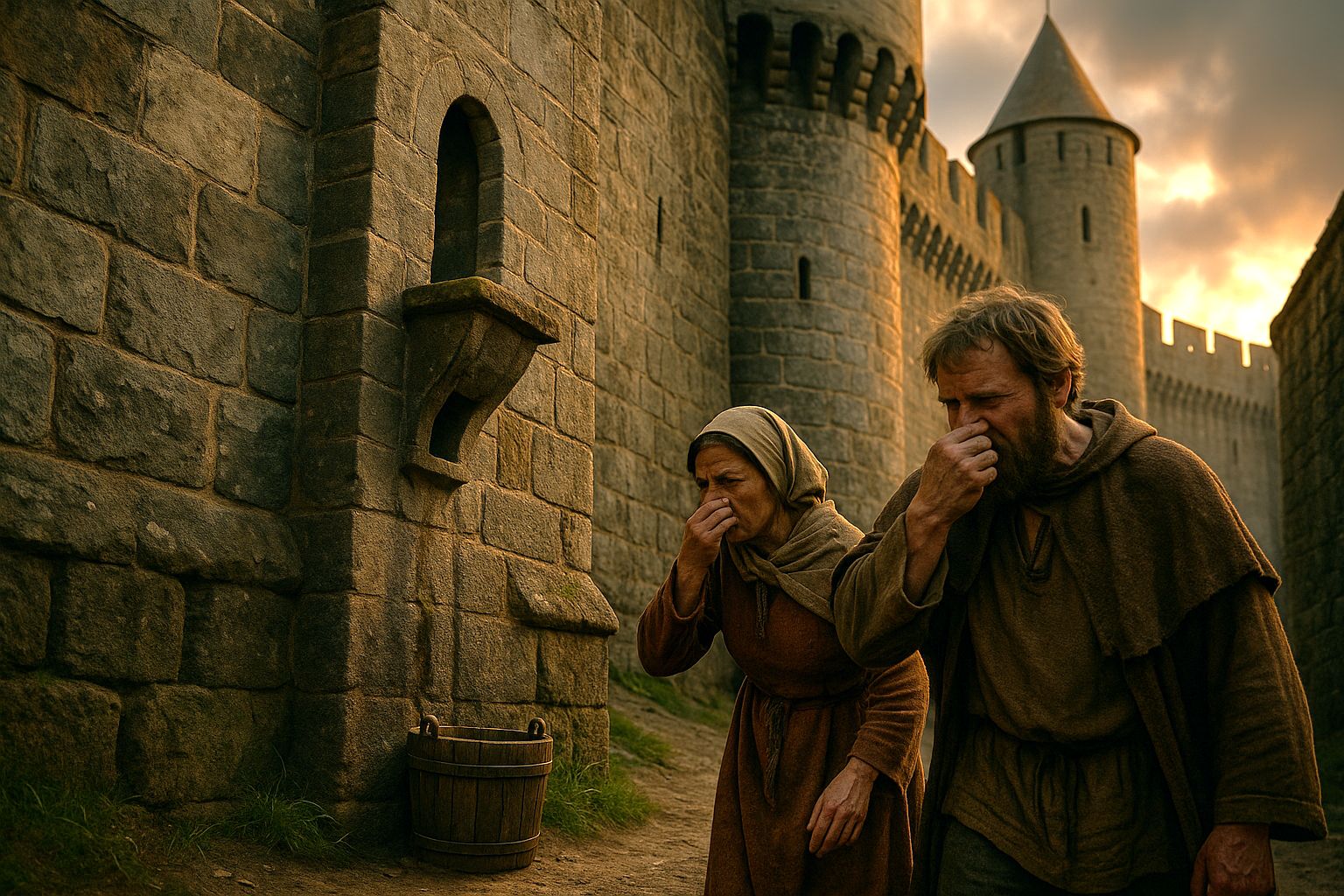
The Toilet Situation: Chamber Pots, Moats & Pure Chaos
The Toilet Situation: Chamber Pots, Moats & Pure Chaos
If you’ve ever complained about a public restroom, just be glad you weren’t living in 13th-century Europe. The Middle Ages were full of mystery, superstition… and raw sewage. While castles, towns, and monasteries all had ways to “handle their business,” the reality was often disgusting, dangerous, and — at times — surprisingly innovative. Let’s plunge into the weird world of medieval toilets.
The Garderobe: The Castle’s Vertical Toilet
In castles, the most common toilet setup was the garderobe — a simple stone or wooden bench with a hole that emptied into the moat or a pit below. These were often built into outer walls, projecting outward, so waste could drop straight down the side of the castle (hopefully not onto any unlucky passerby).
The term “garderobe” literally means “guarding one’s robes,” and funnily enough, people sometimes hung clothes in or near the shaft — because they believed the ammonia-rich fumes from the waste killed lice. (Yup. Lice death by poo vapors.)
Chamber Pots and Night Soil
For most people — especially in towns or rural villages — going to the toilet meant using a chamber pot. These were small portable bowls tucked under the bed or bench. In the morning, the contents were unceremoniously dumped into the street or gutters, often with a shouted warning like “Garde loo!” (Look out!)
“Night soil” (human waste) was collected by the lowest-ranking workers: gong farmers in cities or peasants in rural areas. It was sometimes sold as fertilizer — which sounds green, but the hygiene was absolutely not.
Monasteries Were Surprisingly Ahead
Monks living in large abbeys often had some of the most advanced medieval plumbing. In places like Rievaulx Abbey in England, running water from a nearby stream was routed into stone channels that flushed out communal latrines. These rows of toilets (sometimes called reredorters) were often part of a dormitory wing, with built-in ventilation and drainage. Medieval monastic toilet tech? Surprisingly impressive.
Toilets in Cities: A Public Health Nightmare
In dense medieval towns like London, Paris or Lübeck, public sanitation was a disaster waiting to happen. Cesspits dug under houses overflowed frequently, and street waste was so common that laws had to ban flinging poop out of windows. Of course, people still did it.
Public latrines did exist in some larger towns, but they were few and often fee-based. The rest of the population went in alleyways, behind market stalls, or over the nearest river. In fact, the Thames was so abused that records show people were fined for building toilets directly above it — which didn’t stop anyone.
The Plague and the Problem of Poop
The connection between poor sanitation and disease wasn’t fully understood until centuries later, but medieval city authorities did notice that filth led to outbreaks. After the Black Death in 1348, many towns introduced stricter rules for waste disposal. Cesspits were to be lined and covered, fines were levied for “foul-smelling waste,” and some cities even mandated the use of public latrines (usually near rivers, still… not great).
The Dangers of Dropping It
Using the toilet in the Middle Ages could literally kill you. There are recorded cases of people falling into latrines and drowning. Latrine shafts could collapse, and gases from decomposing waste occasionally caused suffocation. In 1183, a German nobleman died when the wooden seat of his castle’s privy broke and he fell into the cesspit below.
Toilet Paper? Not Exactly
No Charmin, no bidets. People used moss, hay, rags, leaves, or even handfuls of straw. In the Islamic world, water and handwashing were part of a more advanced hygiene routine, but in most of medieval Europe, you’d be lucky to get a leaf that wasn’t still wet from the morning dew.
So… How Bad Was It, Really?
Pretty bad. But not quite as clueless as the myths suggest. The wealthy had garderobes, monks had smart engineering, and even peasants developed semi-regular waste routines. Still, disease was rampant, the stench was real, and no one had Febreze.
In the end, medieval toilets tell us a lot about class, ingenuity, and how far humans will go when nature calls. We laugh now, but future historians may say the same about our weird obsession with scented candles and blue toilet water.
Sources
British Library
https://www.bl.uk/medieval-english-french-manuscripts/articles/medieval-latrines
English Heritage
https://www.english-heritage.org.uk/visit/places/rievaulx-abbey/history/rievaulx-drainage/
History Extra (BBC)
https://www.historyextra.com/period/medieval/medieval-toilets-dirty-jobs-facts/
Medievalists.net
https://www.medievalists.net/2020/11/medieval-toilets/