How a Typo Almost Started World War III
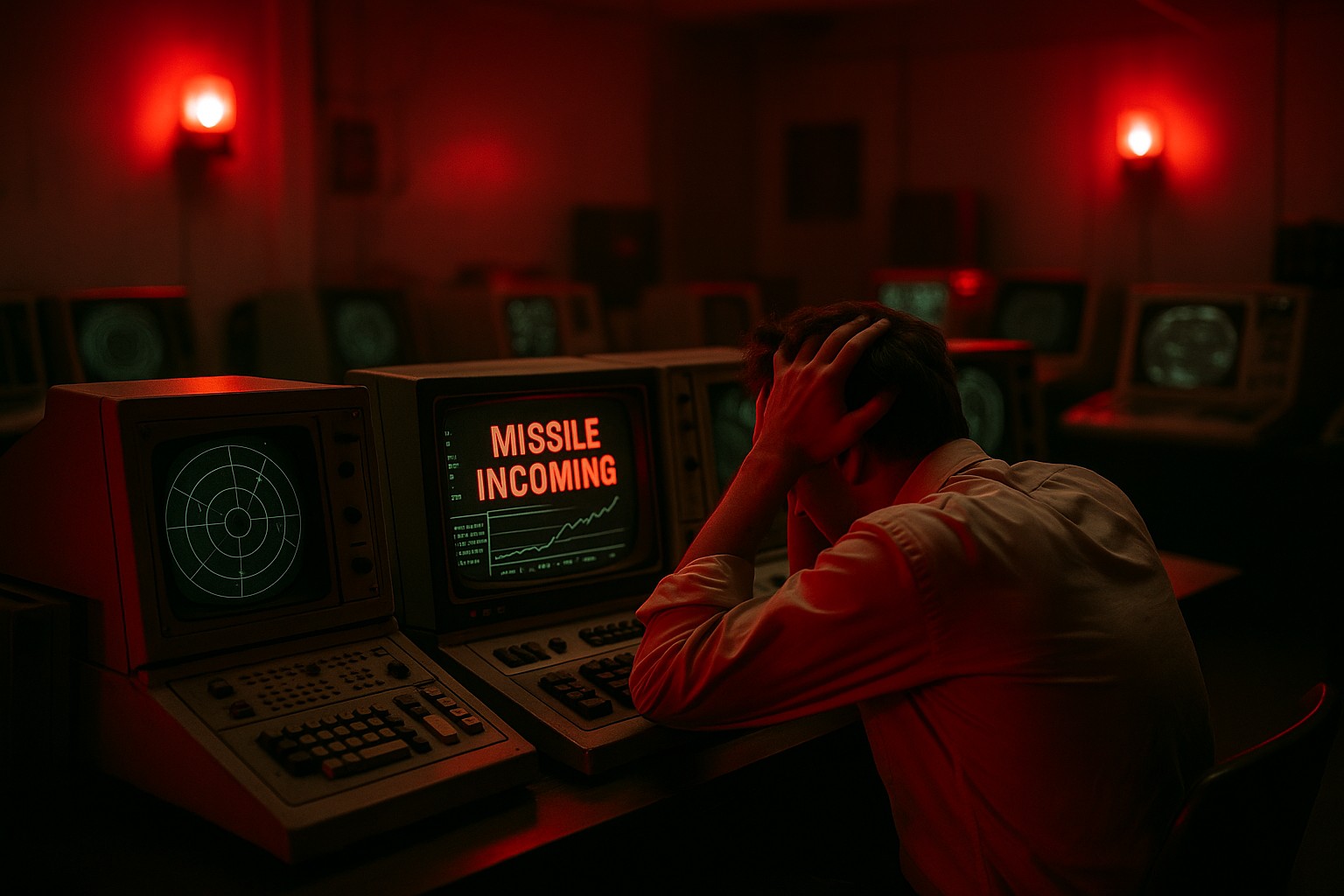
Cold War Control Room Panicking of Incoming Missile
Cold War Control Room Panicking of Incoming Missile
One wrong keystroke, one global catastrophe
In the dead silence of a Cold War night, radar operators scanned the skies for the unthinkable: Soviet nukes. Everyone knew the rules—if you see a missile, you have minutes to decide whether to retaliate. Now imagine sitting at that console, sipping coffee, and suddenly… alarms start blaring. Incoming missiles. The screen confirms it. You have seconds.
And it’s all… a typo.
Welcome to one of the most terrifyingly absurd moments of the Cold War, when a simple data entry error almost triggered global annihilation.
The 1980 NORAD Scare
It happened on June 3, 1980. At the heart of U.S. nuclear readiness stood NORAD (North American Aerospace Defense Command), a highly sensitive system designed to detect threats and respond fast. That morning, their computers flashed a chilling message: Soviet missile launch detected.
The response was immediate. Bomber crews scrambled. Missile silos readied for launch. Command centers across the country were primed for DEFCON escalation. Some officials were already boarding helicopters to get to underground bunkers. It looked real.
Then, just as quickly—it didn’t.
Radar showed nothing. No missiles. No launches. It was, in technical terms, a ghost signal.
The culprit? A “chip malfunction”

Oopsie
The Pentagon later described it as a “faulty computer chip” that had inserted a test scenario into a live feed. Basically, the system started running a simulation—but didn’t label it as one. The simulation looked identical to a real attack. Operators thought it was live data.
A $46 chip nearly ushered in nuclear winter.
This wasn’t even the only time
The 1980 scare wasn’t a one-off. In 1979, a technician accidentally loaded a training tape into NORAD’s system, mimicking a Soviet attack. In 1983, Soviet officer Stanislav Petrov defied protocol and refused to launch a retaliatory strike when their system falsely detected incoming U.S. missiles. (Yes, one guy with nerves of steel literally saved the world.)
The Cold War was filled with almost-apocalypses. Nuclear launch protocols were fast and often terrifyingly brittle. One wrong move, one misread signal, one typo—and goodbye civilization.
The lesson?
Trust, but verify—and maybe label your test files.
What makes these stories so gripping isn’t just the danger, but how laughably human the causes were. Chips. Tapes. Typos. We didn’t nearly destroy the world because of villains in bunkers—we nearly did it because someone didn’t double-check a file name.
Sources
Union of Concerned Scientists
https://www.ucsusa.org/resources/nuclear-close-calls
The New York Times Archives
https://www.nytimes.com/1980/06/07/archives/norad-scanner-error-on-missile-launch-prompted-us-alert.html
Stanislav Petrov Documentary Info
https://www.theguardian.com/world/2013/sep/27/stanislav-petrov-1983-nuclear-war